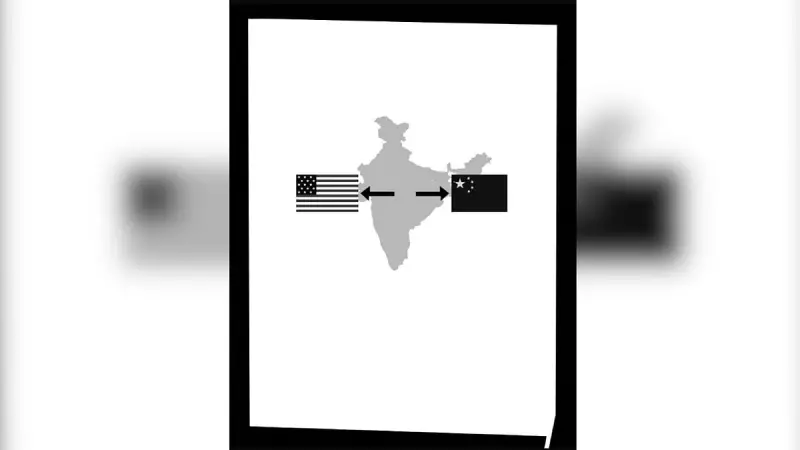
In a significant development with profound implications for Asia's geopolitical landscape, a recalibration of Washington's stance towards Beijing has placed India in a position of heightened strategic exposure. This shift, analysed by security expert Brigadier Anil Raman (retd), suggests that America's commitments are becoming more conditional, urging India to urgently fortify its own capabilities.
The Conditional Nature of American Commitment
Brigadier Raman's assessment, published on 10 January 2026, centres on the evolving dynamics between the United States and China. Historically, strategic partnerships in the region, including Washington's engagement with New Delhi, were viewed through a lens of containing Beijing's influence. However, recent diplomatic manoeuvres indicate a potential 'reset' or reassessment by the US in its approach to China.
This recalibration means that American security guarantees and strategic alignment are no longer perceived as absolute. For India, a nation sharing a long and contested border with China, this introduces a layer of uncertainty. The expert argues that relying solely on external partnerships for regional deterrence is now a riskier proposition.

The Imperative for Indian Self-Reliance
The core of the argument pivots towards an urgent need for India to double down on its own strategic and defence autonomy. The changing great power equations make it imperative for New Delhi to build an indigenous capacity strong enough to deter its northern neighbour independently.
This push for self-reliance spans multiple critical domains:
- Defence Manufacturing: Accelerating the 'Make in India' initiative in defence to reduce dependency on foreign arms and technology.
- Economic Resilience: Strengthening the domestic economy and supply chains to withstand external pressures and conflicts.
- Diplomatic Manoeuvring: Navigating the complex international order with a more flexible and multi-aligned foreign policy that prioritises national interest above bloc politics.
Navigating a Multipolar World Order
The analysis underscores a broader global trend: the transition towards a multipolar world where traditional alliances are fluid. In such an environment, a nation's security is ultimately guaranteed by its own strength. For India, the immediate neighbourly challenge from China remains the primary strategic focus.
Brigadier Raman's commentary serves as a clarion call. It suggests that the perceived shift in Washington's China policy is not merely a diplomatic footnote but a strategic inflection point. India's response must be to fast-track its journey towards comprehensive national power, ensuring that its ability to safeguard sovereignty and maintain regional stability is rooted in its own capabilities rather than contingent on the priorities of other global powers.
The path forward involves difficult choices, significant investment, and unwavering focus. The message is clear: in an era of conditional commitments, self-reliance is not just an ideal but an urgent strategic necessity for India's future security and global standing.