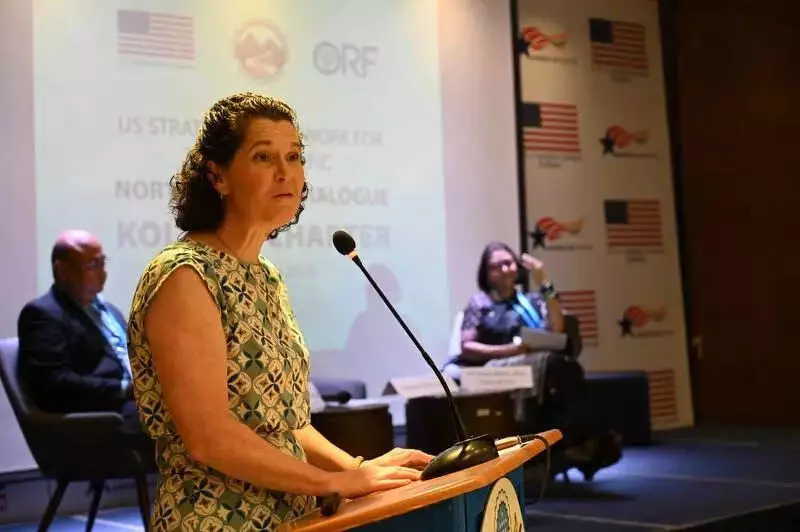
In Kolkata on Friday, US Consul General Kathy Giles-Diaz reaffirmed America's strong commitment to a free, open, and rules-based Indo-Pacific region. She made these remarks during an interactive program at the American Center, as India and the United States continue their negotiations for a proposed bilateral trade agreement.
Eastern and Northeastern India as Critical Trade Nodes
Giles-Diaz highlighted that eastern and northeastern India are rapidly transforming into crucial connection points. These regions are becoming vital links that connect India to global trade networks and international supply chains. She emphasized their growing importance in the broader Indo-Pacific strategy.
Strengthening Connectivity Infrastructure
Officials participating in the session stressed the urgent need for enhanced connectivity through multiple channels. They specifically mentioned ports, railways, inland waterways, and digital corridors as priority areas. Improving these connections would better integrate eastern and northeastern India with worldwide markets.

"The US remains firmly committed to a free and open Indo-Pacific," Giles-Diaz stated clearly. "This means trade must flow freely, sovereignty must be respected, and no country should face coercion through force or economic pressure."
She explained that such a framework creates the right conditions for businesses to invest confidently. It allows ships to move safely across sea routes. It enables data to flow securely between nations. Most importantly, it helps people prosper through increased economic opportunities.
Event Focus and Strategic Discussions
The program, titled 'US Strategic Framework for the Indo-Pacific: North Eastern Dialogue – Kolkata Chapter,' was organized through a partnership. The US Consulate General Kolkata worked together with the Observer Research Foundation to host this important discussion.
Discussions centered on deepening cooperation between India and the United States within the Quad grouping. This strategic alliance includes India, the US, Japan, and Australia. Participants explored ways to promote a free, open, and prosperous Indo-Pacific region through collaborative efforts.
Reducing Supply Chain Vulnerabilities
Giles-Diaz pointed out that strengthening these regional connections serves another crucial purpose. It helps reduce dependence on what she described as "fragile or adversarial supply chains." By developing more reliable trade routes through eastern India, both countries can create more resilient economic networks.
She referenced recent comments from newly-arrived US Ambassador Sergio Gor in New Delhi. "Our relationship is anchored at the highest levels," Giles-Diaz noted. "President Trump and Prime Minister Modi see eye-to-eye on many key issues, including the importance of a strong, sovereign, and prosperous Indo-Pacific."
This alignment between leadership, she argued, creates genuine momentum for cooperation across multiple domains. Trade, technology, and security collaboration all benefit from this shared strategic vision.
Kolkata's Historical and Contemporary Significance
The Consul General called Kolkata a natural venue for this important dialogue. She reminded attendees that the city has historically served as India's gateway to the Bay of Bengal and Southeast Asia. This geographical position gives Kolkata enduring strategic importance.
As India expands its engagement across the Indo-Pacific region, Giles-Diaz observed that eastern and northeastern regions are regaining their historical significance. They are once again becoming critical nodes that connect the country to global trade flows and international supply chains.
Opportunities for US Companies
Giles-Diaz underlined the significant role that American companies could play in this development. She identified several areas where US expertise could make substantial contributions:
- Advanced logistics systems
- Smart port technologies
- Digital trade platforms
- Clean energy solutions
- Infrastructure finance mechanisms
Such investments, she suggested, would generate employment opportunities and stimulate investment on both sides. American companies bringing their knowledge to India's eastern regions could create mutually beneficial economic partnerships.

The discussions in Kolkata reflect ongoing efforts to strengthen the strategic partnership between India and the United States. Both nations appear committed to developing eastern India's infrastructure and connectivity. This cooperation aims to enhance regional stability while creating new economic opportunities throughout the Indo-Pacific.