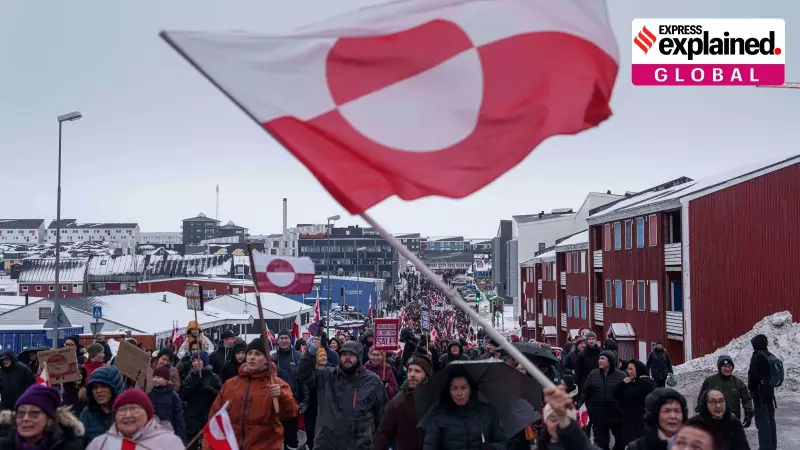
America's Greenland Gambit Puts NATO at Risk
An American military move on Greenland would create immediate contradictions for Washington's foreign policy. This action could potentially destroy the North Atlantic Treaty Organization in one decisive blow. Russia and China stand to gain significantly from such developments.
More concerning, this situation might trigger a dangerous new nuclear arms race among nations feeling threatened by the changing security landscape.
NATO's Existential Crisis
The first casualty of any American excursion into Greenland would be NATO itself. Founded in 1949 to counter Soviet threats, the alliance now includes 32 member nations. Its core principle remains collective security through Article 5, which treats an attack on one member as an attack on all.

Ironically, Denmark administers Greenland and was among the first to invoke Article 5 after the 9/11 attacks. Danish soldiers fought alongside American troops in Afghanistan, suffering significant casualties relative to their population size.
Now Denmark faces a different scenario entirely. The country has stated it would invoke Article 5 if the United States violates Greenland's territorial integrity. This creates an unprecedented predicament for NATO, with its most powerful member potentially attacking another alliance nation.
Russia and China Benefit from Division
American President Donald Trump's rhetoric about Greenland plays directly into the hands of Russia and China. NATO was originally designed to neutralize Soviet threats, and any fractures within the alliance would benefit Russian President Vladimir Putin.
Putin would welcome any move that fractures NATO or diverts the bloc's resources away from Ukraine. While the Greenland discussion focuses on limiting Russian influence in the Arctic, experts argue defeating Putin in Ukraine represents a more effective strategy.
American Senator Jeanne Shaheen emphasized this point recently. "The strength of NATO depends on unity, trust and respect for the sovereignty of every member state," she stated while introducing legislation to prevent US actions against NATO territories.
Existing Agreements and Misplaced Focus
The United States already maintains significant access to Greenland through a standing treaty dating back to 1951. America once operated 17 bases there, progressively determining 16 were unnecessary. These facilities could be reactivated immediately if needed.
When Trump claims China and Russia are expanding their Arctic presence to counter NATO, he identifies a real concern but misplaces the location. The actual focus of Russian-Chinese cooperation centers on waters around Alaska, not Greenland.
Deputy Defense Secretary Kathleen Hicks confirmed this assessment in 2024, noting growing military cooperation between China and Russia near Alaskan waters. Subsequent Pentagon reports highlighted America's aging Arctic infrastructure facing degradation from environmental factors.
The Push for Greenland
How does Trump plan to acquire Greenland? The White House press secretary has explicitly stated military takeover remains possible. Meanwhile, Secretary of State Marco Rubio has discussed purchasing the territory through negotiations with European officials.
Denmark clearly has no interest in selling Greenland. The topic has become politically charged in both Copenhagen and Nuuk, Greenland's capital, where any commercial deal could collapse the Danish government.
Three different Trump constituencies within America appear to drive the Greenland push:
- Tech investor Peter Thiel discusses establishing libertarian settlements in Greenland
- Elon Musk expresses interest in rare earth minerals beneath the icy territory
- Billionaire Ronald Lauder reportedly first suggested the Greenland idea to Trump
The American president reportedly views this through a real estate developer's lens, approaching the situation instinctively as a property acquisition.
Nuclear Proliferation Concerns
Canada would become the most concerned nation if America annexed Greenland. The North American country would find itself hemmed in on all sides, sparking serious security debates.

Strategic discussions in Canada already include reconsidering nuclear weapons positions. Jean-François Bélanger, assistant professor at the Royal Danish Defence College, noted Canadians must confront "difficult questions" about national security in the current geopolitical environment.
If NATO were to implode over Greenland, other nations might reconsider their nuclear options:
- Germany and Poland could pursue nuclear capabilities
- South Korea might accelerate nuclear development
- Japan could reconsider its non-nuclear principles
This cascade effect could potentially trigger a new nuclear arms race, destabilizing global security arrangements that have maintained relative stability for decades.
The Greenland situation represents more than a territorial dispute. It threatens the foundation of transatlantic security while creating conditions for dangerous nuclear proliferation among nations feeling newly vulnerable.