

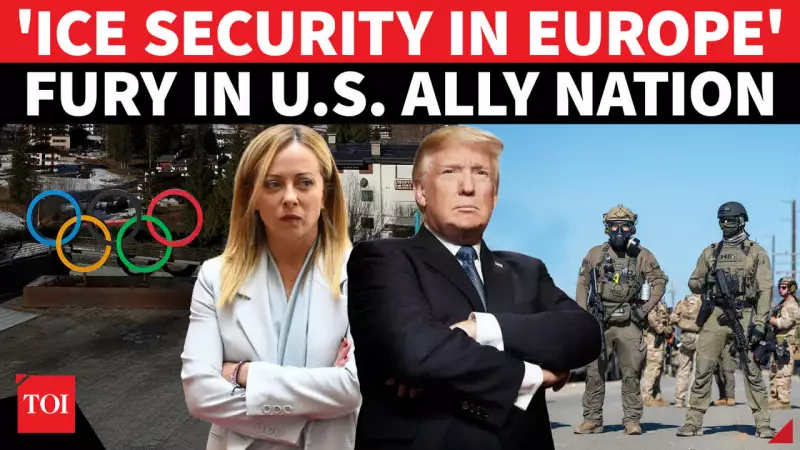
U.S. ICE Agents to Provide Diplomatic Security at Milan-Cortina Winter Games, Sparking Italian Controversy
In a development that has ignited significant debate across Europe, U.S. Immigration and Customs Enforcement (ICE) agents are set to assist with diplomatic security during the upcoming Milan–Cortina Winter Games. According to sources at the U.S. Embassy, confirmed by the Associated Press, these agents will be deployed specifically to support protection for U.S. diplomats attending the international sporting event.
Official Clarifications and Italian Reactions
U.S. officials have emphasized that ICE agents will not conduct any immigration enforcement operations during their deployment. Their role is strictly limited to providing security assistance for American diplomatic personnel. However, this revelation has not been well-received in Italy, where it has sparked considerable controversy.
Milan Mayor Giuseppe Sala has emerged as a vocal opponent, strongly opposing the presence of ICE agents in the city. The mayor's objections highlight broader concerns about the agency's international role and past actions.

Mixed Responses from Italian Authorities
Italian authorities have issued mixed responses to the news. While some officials have expressed reservations, others have stressed that no formal confirmation has been received regarding the deployment. This lack of official clarity has only fueled the ongoing debate, creating a tense atmosphere as preparations for the Winter Games continue.
Broader Context and Political Implications
The controversy intensifies as U.S. Vice President JD Vance prepares to lead the American delegation to the games. This deployment comes amid recent scrutiny of ICE actions, particularly during protests in Minneapolis, which have drawn international attention. The presence of ICE agents in Europe, even in a limited security capacity, raises questions about diplomatic protocols and cross-border law enforcement cooperation.
As discussions unfold, the situation underscores the delicate balance between security needs and political sensitivities in international events. The outcome of this debate could have implications for future U.S.-European collaborations on security matters.

