

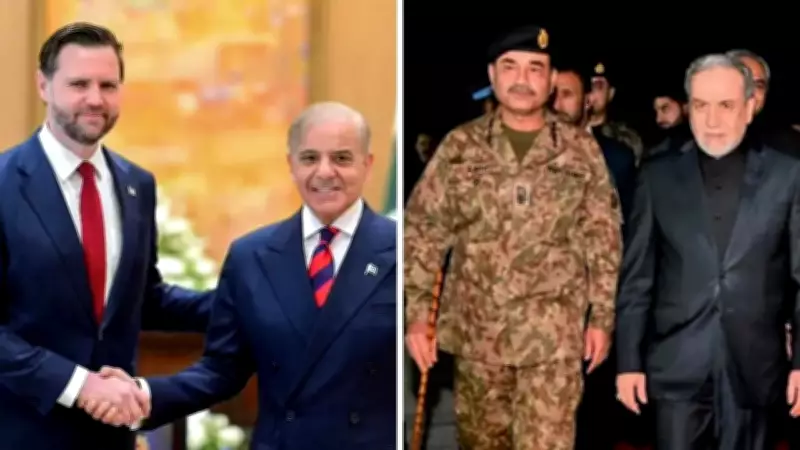
US-Iran Nuclear Talks Hit Impasse Over Key Issues
Peace talks between the United States and Iran have stalled after significant disagreements emerged over Tehran's nuclear commitments, with the scope and duration of uranium enrichment curbs becoming the primary sticking point. According to reports from the Wall Street Journal and the New York Times, Washington proposed a stringent 20-year freeze on Iran's uranium enrichment activities in its latest proposal. However, Tehran countered by stating it could only agree to a much shorter five-year sanction, highlighting a deep divide in negotiations.
Divergent Proposals and Tense Atmosphere
Iran has offered to suspend uranium enrichment for up to five years, an offer that was reportedly rejected by the Trump administration, which insisted on the longer 20-year timeframe. This stance aligns with US President Donald Trump's repeated assertions that Tehran must permanently end domestic enrichment, driven by concerns that it could provide a pathway to nuclear weapons capability. Beyond enrichment, the two sides also clashed on the scope of a potential deal. While Washington prioritized the nuclear issue and the reopening of the Strait of Hormuz, Tehran sought a broader agreement that addresses additional concerns.
The negotiations, held at Islamabad's Serena Hotel, were conducted across two separate wings and a shared area: one for the US delegation, one for the Iranians, and a common space for trilateral meetings involving Pakistani mediators. Mobile phones were barred from the main room, forcing delegates, including US Vice President JD Vance and Iranian Parliamentary Speaker Mohammad Baqer Qalibaf, to step outside during breaks to communicate with their respective governments. The talks stretched for more than 20 hours, with moments of high tension. During one instance, raised voices were heard outside the negotiating room, prompting Pakistan's Army Chief Asim Munir and Foreign Minister Ishaq Dar to call for a tea break and move the delegations back into separate rooms.

Key Issues and Near-Breakthrough
Apart from uranium enrichment, other critical issues included reopening the Strait of Hormuz—a vital global energy transit route effectively blocked by Iran—and the lifting of international sanctions on Tehran. Sources involved in the talks revealed that the sides came "very close" to an agreement, estimating they were "80% there" before hitting unresolved issues. A Pakistani government source noted, "There was a strong hope in the middle of the talks that there would be a breakthrough and the two sides would reach an agreement. However, things changed within no time."
When discussions turned to guarantees, such as non-aggression commitments and sanctions relief, the tone of Iranian Foreign Minister Abbas Araghchi reportedly sharpened, according to two Iranian sources. Two senior Iranian sources described the atmosphere as heavy and unfriendly, adding that while Pakistan tried to soften the mood, neither side showed any willingness to ease tensions. Despite the stalemate, officials told The Wall Street Journal that they are considering a second round of face-to-face talks, though no specific details have been disclosed.
This impasse underscores the complex challenges in US-Iran relations, with both nations holding firm on their core demands. The outcome of future negotiations will likely hinge on finding common ground on enrichment duration, regional security concerns, and economic sanctions, all of which remain pivotal to achieving a lasting agreement.






