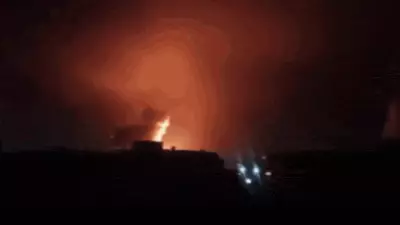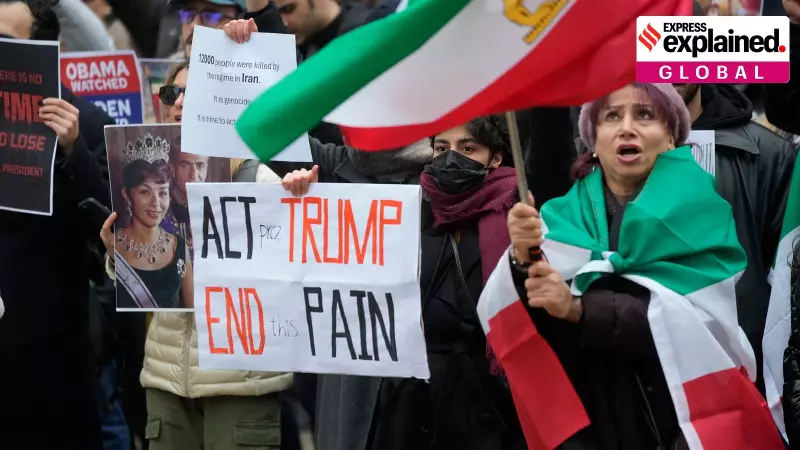
War drums are beating louder in Iran following US President Donald Trump's statement promising that "help is on its way." Protests continue to rage across the country, with human rights activists reporting more than 2,500 deaths since demonstrations began on December 28. The Iranian regime has responded with brutal force and communications blackouts, particularly since last Thursday.
Diplomacy Remains the First Option
Both the United States and Iran have signaled that diplomatic channels remain open. Iranian officials have historically proven adept at navigating crisis situations, even during hostile circumstances. This skill was evident when Iran negotiated the JCPOA nuclear deal with the Obama administration despite facing massive sanctions.
The Iranian political landscape contains multiple factions - moderates seeking engagement and conservative hardliners favoring confrontation. However, all groups share a commitment to preserving the regime led by Supreme Leader Ayatollah Ali Khamenei.

The United States also emphasizes diplomacy as its primary approach. White House press secretary Karoline Leavitt stated on Monday that "diplomacy is always the first option for the president." She noted that Iran's private messages differ significantly from its public statements, suggesting potential negotiation opportunities.
Leavitt clarified that while diplomacy comes first, all other options remain available. "The President is unafraid to use military options if and when he deems necessary," she emphasized, adding that "nobody knows that better than Iran."
Potential Military Escalation Scenarios
Calibrated Attacks
Should diplomatic efforts fail, analysts suggest the Trump administration, possibly with Israeli cooperation, might target Iranian military infrastructure. Potential targets could include:
- Revolutionary Guards command and control centers
- Military warehouses storing weapons and supplies
- Government and militia facilities
A more significant escalation would involve attacks on senior Iranian leaders, similar to the 2020 strike that killed commander Qassem Soleimani. President Trump previously indicated he might target Supreme Leader Khamenei himself.
Iran's conventional military weaknesses became apparent during last June's 12-day conflict, when American and Israeli air strikes effectively neutralized Iranian air defense systems. These strikes enabled US B-2 bombers to target heavily fortified underground nuclear facilities.
The US Central Command has already positioned six naval vessels in the region, according to the Financial Times. Three Arleigh Burke-class destroyers - USS Mitchell, USS McFaul, and USS Roosevelt - are stationed in the Arabian Gulf and Red Sea. These multi-mission ships specialize in anti-air, anti-submarine, and anti-surface warfare.
Additionally, three Independence-class littoral combat ships - USS Canberra, USS Tulsa, and USS Santa Barbara - operate in the Arabian Gulf. These vessels excel in coastal operations including mine warfare and anti-submarine missions.
With five US naval vessels in the Arabian Gulf, America maintains an aggressive posture toward Iran, supported by regional allies including Saudi Arabia, UAE, and Pakistan. However, military experts note that air strikes alone cannot guarantee regime change in Iran. As one senior diplomat observed, "It is very difficult to do a regime change from 30,000 feet above."
Ground Offensive Possibility
This limitation leads to consideration of ground operations. The recent capture of Venezuelan President Nicolas Maduro with minimal American casualties has sparked discussions about similar operations in Iran. However, Iran's strong Revolutionary Guards command structure makes such missions significantly more challenging.
A ground confrontation between US and Iranian forces would likely result in substantial casualties on both sides, potentially escalating into full-scale invasion and prolonged conflict. Such military engagement would likely face opposition from Trump's political base, which has historically opposed American interventions in Iraq and Afghanistan.
India's Strategic Concerns
Any US military action against Iran would significantly impact India, much like the Afghanistan war affected the region. India faces multiple challenges in this scenario:

Diplomatic Challenges
India would find it difficult to support US military intervention in Iran. New Delhi maintains important relationships with both Washington and Tehran, creating a delicate balancing act.
Economic Implications
India has nearly eliminated oil imports from Iran due to US sanctions imposed during Trump's first term. Iranian oil now represents a minimal portion of India's energy portfolio. However, broader regional instability threatens India's energy security, as approximately 60% of its energy needs come from the Middle East.
Regional Stability Concerns
If Iran retaliates against US bases in Saudi Arabia, UAE, Qatar, or other regional locations, widespread turmoil could ensue. India has approximately 8-9 million citizens living and working in the Gulf region, making regional stability crucial for their safety and for India's economic interests.
Any instability in the Middle East directly threatens India's energy security and could trigger inflationary pressures at home. As tensions continue to mount, India watches carefully, aware that developments in US-Iran relations will have significant consequences for its foreign policy, economic stability, and regional security interests.