US Mid-Term Elections: A Crucial Bellwether for Trump's Second Term
President Donald Trump completed his first year in office for a second term on January 20, 2026. His tenure so far can be described with one word: disruptive. The world continues to grapple with significant events, including the abduction of a sitting president in Venezuela. Now, Greenland has captured Trump's attention, causing concern among European Union nations. They worry about the long-term impact of the US President's actions.
Trump's Global Approach: Unilateral and Impulsive
Trump's handling of global affairs remains Pavlovian. It often involves impulsive deal-making and impetuous unilateral actions. The US mediated talks between Russia and Ukraine. It attacked Iran's nuclear facilities, reportedly to advance Israel's interests. Trump brokered a ceasefire in Gaza that many consider unfair. At the same time, he showed indifference to killings after the October 2022 Hamas attack.
Globally, the disruption feels most palpable in multilateralism and international relations. Trump's approach represents a sharp acceleration of "America First" principles. It emphasizes unilateral actions and bilateral deals. It shows deep skepticism toward international institutions.

The Retreat from Multilateral Frameworks
This skepticism has led to a deliberate retreat from many multilateral frameworks. The White House views these as constraints on US sovereignty. It considers them wasteful or misaligned with American interests. On his first day in office, Trump withdrew the US from the Paris Climate Agreement. He also initiated withdrawal from the World Health Organization.
These moves reversed Biden-era re-engagements. They echoed decisions from Trump's first term. Subsequently, the State Department conducted a comprehensive review. It examined all international organizations, conventions, and treaties. The goal was to identify those "contrary to the interests of the United States." This review led to the country's withdrawal from numerous global bodies.
Earlier this month, a presidential memorandum directed the US withdrawal from 66 international organizations. This included 31 UN-affiliated entities. Examples are the UNFCCC/IPCC for climate, UN Women, and the UN Population Fund. It also included parts of the UN Human Rights Council and remnants of UNESCO. The list contained 35 non-UN bodies as well.
Decades of patiently built, consensual multilateralism now lie in tatters. This damage spans domains from trade to climate to weapons of mass destruction. It could prove irreparable even after the Trump presidency ends.
India's Complex Position in Trump's World
In the most recent Trump diktat related to Gaza, the UN has been sidelined. Instead, India finds itself brought into the US tent for managing global peace and security. Trump formally invited Prime Minister Narendra Modi to participate in a new international body. This body is called the Board of Peace for Gaza.
This invitation could help stabilize the troubled India-US bilateral relationship. That relationship has faced buffeting from harsh trade tariffs. However, the terms and conditions of joining a Trump-chaired global board require careful review. For India, this presents a potential Catch-22 situation.
Erosion of Presidential Dignity and Press Norms
Many of President Trump's actions over the last year have undermined the dignity of the POTUS office. Examples include the humiliation of visiting dignitaries at the Oval Office. The President's open craving for a Nobel Prize has not pleased some supporters at home.
A particularly ugly pattern involves using insulting, often personal and gendered language. Trump employs this language to demean women media representatives. This behavior manifests the arrogance of power. It demeans the very idea of America.
This conduct echoes rhetoric from Trump's first term and pre-presidency days. However, it intensified in frequency and visibility during late 2025. November and December saw widespread criticism for sexism. Critics also noted attempts to disparage or silence questioners. They pointed to an erosion of basic press norms.
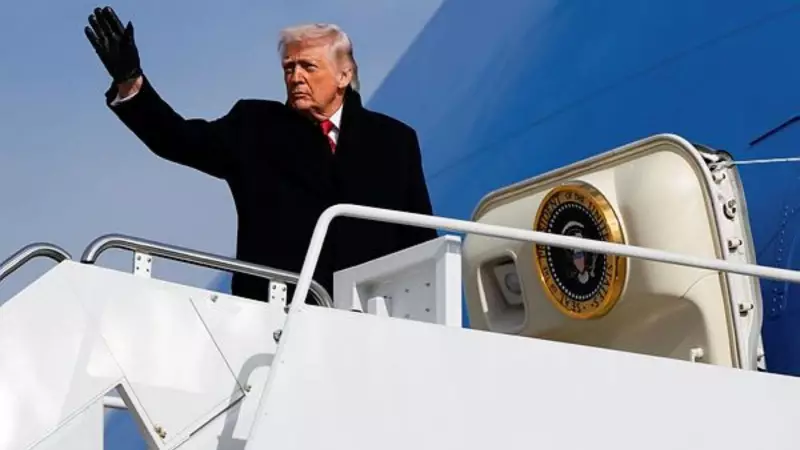
For instance, during a press chat on Air Force One, Trump reportedly snapped at a Bloomberg reporter. He said, "Quiet, piggy," after she asked about the Jeffrey Epstein files.

Inconsistent Policies and Double Standards
Trump's policies often appear inconsistent, fickle, or mercurial. At their core, they remain unpredictable. Most of Trump's interlocutors have had to deal with his double standards.
Experts interpret this as his internalization of "the art of the deal." He resorts to brinkmanship and recklessness. The aim is to stun competitors or adversaries, then prevail.
The most egregious instance of such double standards relates to recent Iranian protests. Reports indicate over 5,000 people were killed. Trump's public posture showed determination to protect hapless Iranian citizens from their regime. Simultaneously, the US President remained totally indifferent to mass killings in Palestine-Gaza. He maintained a stoic silence on those events.
Geopolitical Discord and Domestic Divisions
Trump's second year unfolds against a backdrop of unprecedented geopolitical discord. Global uncertainty compounds this situation. A bitter and divisive domestic political ecosystem in the US adds to the complexity. Familiar guardrails and protocols in both domains have been jettisoned.
At the macro level, managing weapons of mass destruction norms remains an abiding challenge. The New START Treaty between the US and Russia expires on February 5. This treaty is the last remaining bilateral arms control agreement. It limits the deployment of strategic nuclear forces between the two countries. The big question remains: Will Trump renew it?
Within the US, a worrying tendency involves using force to deal with immigration-related protests. Minnesota serves as a case in point. Hopefully, the word "destructive" will not gain traction in the next annual assessment of Trump-triggered detritus.
Self-Assessment and Political Reality
In an interview marking one year in office, Trump described his performance. He said, "I think we've done a great job. Maybe the best job ever in the first year." This self-assessment might seem delusional to many. However, Trump is the POTUS. The world must deal with that reality.
For any elected leader, domestic political support is imperative for effective governance. The forthcoming mid-term elections in the US will act as a bellwether. They will signal the trajectory for the next three years of the Trump presidency.
If the Democrats prevail, a sullen White House may well become the leitmotif. For India, remaining engaged with the US calmly represents the most prudent course. This approach is essential for steering through this era of turbo-charged Trump turbulence.