The United States has put forward a new initiative aimed at de-escalating tensions between Israel and Lebanon amid ongoing border clashes. Concurrently, President Donald Trump has reportedly returned a proposed agreement with Iran for further revisions, extending the diplomatic process.
US Proposal for Israel-Lebanon De-escalation
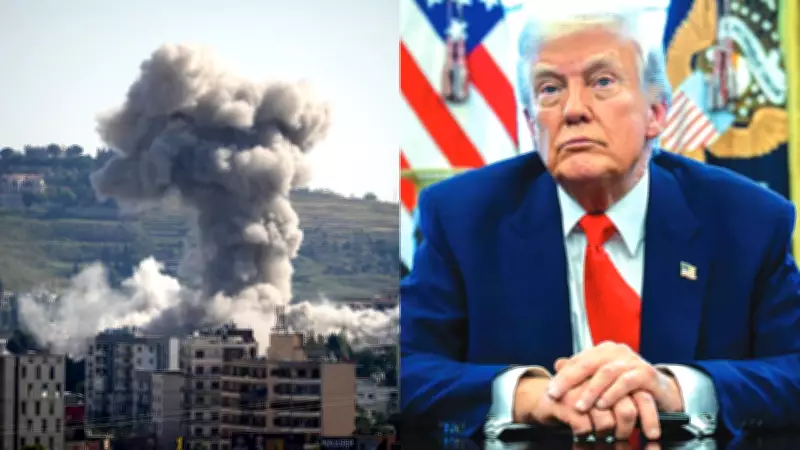
US Secretary of State Marco Rubio held discussions with Lebanese President Joseph Aoun and Israeli Prime Minister Benjamin Netanyahu regarding diplomatic negotiations between Israel and Lebanon, a US official confirmed on Sunday. According to the official, Washington's initial step involves the Iranian-backed militant group Hezbollah ceasing all attacks on Israel, with Israel reciprocating by refraining from escalatory actions in Beirut.
"This would create space for gradual de-escalation and an effective cessation of hostilities," the official stated. The proposal aims to establish a framework for reducing violence along the border, where clashes have persisted despite a ceasefire announced over six weeks ago.

President Aoun sought to advance the proposal and secure an agreement, the official added. However, Lebanese Parliament Speaker Nabih Berri, who claimed to guarantee Hezbollah's commitment to a ceasefire, placed the onus on Israel to stop "shooting first."
The proposal comes as Israeli Prime Minister Netanyahu ordered troops to move further into Lebanon in the battle against Hezbollah. In the latest advance, Israeli forces seized the 900-year-old Beaufort Castle and a strategic ridge in southern Lebanon, according to the military. This followed one of the heaviest days of Hezbollah fire toward northern Israel since the April ceasefire, prompting school closures and restrictions.
The US official emphasized that Washington does not expect Israel to absorb ongoing attacks on its civilians from Hezbollah.
Trump Seeks Changes to Iran Ceasefire Proposal
Simultaneously, days after describing the proposed agreement with Iran as "largely finalized," Trump reportedly returned the draft text for extensive modifications. According to US news outlets, the latest draft includes a 60-day cessation of hostilities, tougher provisions on Iran's nuclear commitments, and the reopening of the Strait of Hormuz during a meeting with advisers.
"The one guarantee that I have to have is that there will be no nuclear weapons," Trump asserted during a broadcast interview on Fox News. However, no formal agreement has been announced yet.
Trump has expressed concern over the extent of financial relief offered to Tehran under any agreement, wary of comparisons with the Obama-era nuclear deal, which he has criticized as too lenient. He stated that there had been no discussion of exchanging money as part of the deal, while Iran maintains that financial provisions must be included.
A White House official said, "President Trump will only make a deal that is good for America and satisfies his red lines." The proposal has been described as a memorandum of understanding awaiting formal approval from both sides.
Iranian officials have insisted that no agreement will be accepted without clear guarantees. Foreign Minister Abbas Araghchi urged caution over reports surrounding the negotiations, stating, "Until a conclusion is reached... everything that is being said now is speculation."
Democratic Senator Chris Coons, a member of the Senate Foreign Affairs Committee, noted that the terms outlined by Trump appear acceptable on paper but could prove difficult to implement, particularly regarding the Strait of Hormuz.
The negotiations follow months of conflict and a fragile truce that began on April 8. Despite repeated indications from Trump that a final agreement was close, a formal deal has yet to be reached.
Adding pressure to the talks, US Secretary of War Pete Hegseth warned that military action could resume if any agreement fails to meet Washington's requirements. "Our stockpiles are more than suited for that," Hegseth said during an address in Singapore.