US-Based Journal Report Calls for India to Intensify Exposure of Pakistan's Terror Links
A recent report published in the US-based independent journal Eurasia Review has emphasized that India must persistently expose Pakistan's deep-rooted connections with terrorist organizations and its ongoing strategy of waging proxy wars against neighboring nations. The report highlights that Islamabad has historically avoided accountability due to widespread international apathy, allowing its activities to continue unchecked.
Strengthening India's Anti-Terrorism Framework
The analysis strongly advocates for India to significantly enhance its domestic anti-terrorism apparatus to effectively and independently counter the persistent threat of Pakistan-sponsored terrorism. Beyond military responses, the report recommends that New Delhi should implement comprehensive non-kinetic measures designed to impose a prohibitively high cost on Pakistan for its support of militant groups.
Critique of UN Monitoring Team as a 'Paper Tiger'
Writing for the journal, former army officer Nilesh Kunwar provided a critical assessment of the United Nations Analytical Support and Sanctions Monitoring Team. He described the body, which operates under the Security Council's 1267 Sanctions Committee, as unfortunately being little more than a "paper tiger." Kunwar noted that the team's reports are primarily based on unverified feedback from member states without conducting independent investigations or issuing binding directives.

The report specifically references the Monitoring Team's recently released 37th report, which documents links between the Pakistan-based proscribed terrorist group Jaish-e-Mohammad (JeM) and several major attacks. These include the devastating Pahalgam attack on April 22, 2025, and the Red Fort suicide car bombing on November 9, 2025. The UN document also notes JeM's formal announcement of a women-only wing named Jamaat-ul-Muminat, created explicitly for waging global jihad.
However, the Eurasia Review report points out a significant limitation: by qualifying that these incidents were merely "noted" by a member state—implicitly India—the UN report characteristically refrains from fully endorsing its own observations, thereby weakening its impact.
Diplomatic Leverage and Evidentiary Advantage
While acknowledging that the UN team lacks enforcement "teeth" and fails to act as an effective deterrent, the analysis suggests its reports still provide valuable diplomatic leverage. In this instance, India holds a clear advantage. Islamabad's claim that JeM is "defunct" is described as palpably false and constitutes a feeble defense, whereas New Delhi's assertions regarding JeM's ongoing activities are supported by substantial, irrefutable hard evidence.
Exposing Contradictions in Pakistan's Official Statements
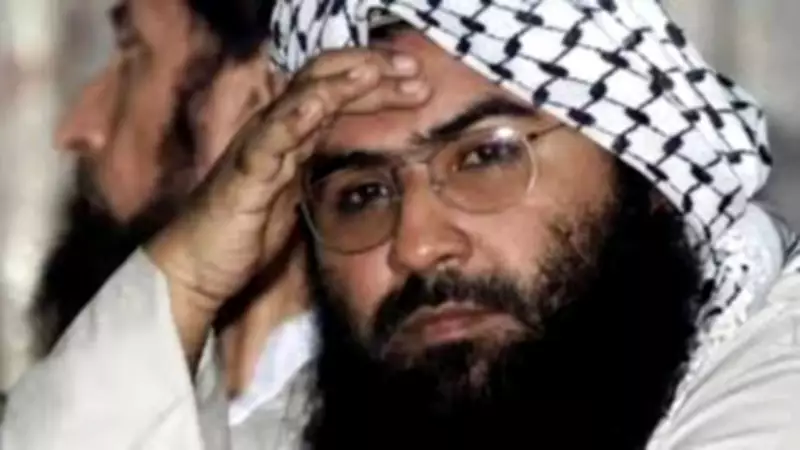
The report further highlights glaring contradictions within Pakistan's own official narratives. It cites the attempt by the Director General of Inter-Services Public Relations (ISPR), the media wing of the Pakistani armed forces, to deny the presence of JeM chief Masood Azhar in the country. This denial was labeled as "laughable," given that just days earlier, Pakistan's then Foreign Minister Shah Mahmood Qureshi had not only confirmed Azhar's presence in Pakistan but had even provided a health update, stating, "He is very unwell… to the extent that he cannot leave his house."
Call for a Proactive 'Name and Shame' Policy
The concluding section of the report underscores a pressing need for India to adopt a more proactive and forceful stance. It recommends rigorously following a 'name and shame' policy to systematically expose Pakistan's continued use of terrorism as a deliberate instrument of its foreign policy. By doing so, India can apply greater international pressure and work towards holding Pakistan accountable for its sustained support of militant networks that threaten regional stability.