

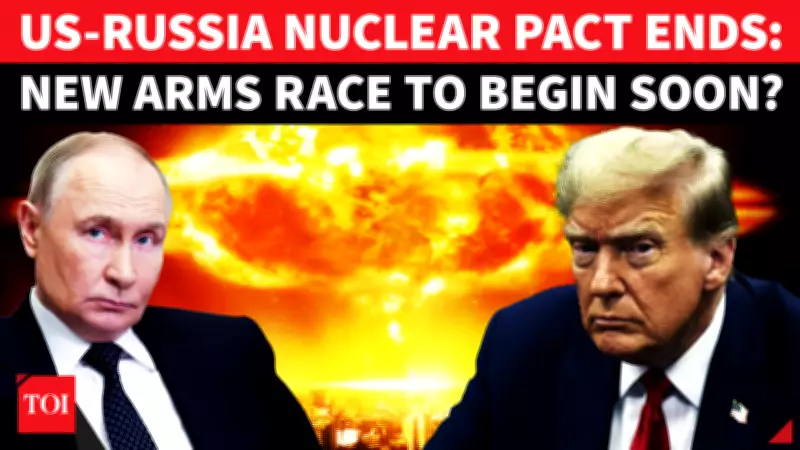
Post-New START Era: Global Nuclear Uncertainty as U.S.-Russia Treaty Expires
With the New START treaty expiring, the United States and Russia are now entering uncharted nuclear territory. This pivotal moment marks the disappearance of the last remaining limits on the world's two largest nuclear arsenals, raising profound questions about global security and stability.
Immediate Consequences of Treaty Expiration
The end of the New START treaty brings several immediate and significant changes to the nuclear landscape between the two superpowers. Key provisions that once provided a framework for restraint have now lapsed, creating a vacuum in international arms control.
- End of Inspections and Data Sharing: One of the most critical aspects of the treaty was the mutual verification regime, which allowed for on-site inspections and regular data exchanges regarding nuclear stockpiles. With this mechanism gone, transparency between the U.S. and Russia has dramatically diminished, increasing the potential for miscalculation and mistrust.
- No Limits on Deployed Warheads: The treaty previously capped the number of deployed strategic nuclear warheads at 1,550 for each country. Its expiration removes this ceiling, potentially allowing both nations to rapidly expand their arsenals without any formal constraints.
- Loss of Communication Channels: The treaty served as a diplomatic channel for discussing nuclear issues. Its absence may hinder crisis communication, making it harder to de-escalate tensions during periods of heightened conflict.
Rising Risks of Escalation and Arms Race
In a world already grappling with international instability, the expiration of New START introduces new layers of risk that could reshape global security dynamics. The potential for a renewed arms race is particularly concerning, as both nations may feel compelled to bolster their nuclear capabilities in the absence of mutual limits.

The psychological impact of unlimited nuclear arsenals cannot be overstated. Without the treaty's constraints, there is a heightened fear that either side might pursue aggressive posturing or rapid modernization of their nuclear forces. This could trigger a cycle of escalation, where each country responds to perceived threats by increasing its arsenal, leading to a dangerous and costly arms race.
Moreover, the erosion of trust between the U.S. and Russia complicates diplomatic efforts to address other global crises. As mistrust grows, the likelihood of misunderstandings or accidental confrontations increases, potentially undermining decades of nuclear restraint that have helped prevent catastrophic conflicts.
Broader Implications for Global Security
The shift away from formal nuclear agreements has far-reaching consequences beyond just U.S.-Russia relations. It sets a precedent that could influence other nuclear-armed states, such as China, North Korea, and India, potentially leading to a more fragmented and volatile international security environment.
- Strain on Diplomacy: The collapse of New START may weaken multilateral efforts to promote disarmament and non-proliferation, making it harder to negotiate future treaties or address emerging nuclear threats.
- Impact on Allies and Adversaries: Countries allied with the U.S. or Russia may feel pressured to enhance their own security measures, while adversaries might see an opportunity to exploit perceived vulnerabilities.
- Undermining Decades of Progress: Since the Cold War, arms control agreements have played a crucial role in reducing nuclear risks. The expiration of New START threatens to reverse this progress, highlighting the fragility of international norms in an era of growing geopolitical tensions.
As the world watches this development unfold, the need for renewed dialogue and confidence-building measures becomes ever more urgent. Without proactive steps to manage this new reality, the risks of escalation, mistrust, and a destabilizing arms race will continue to rise, posing a significant challenge to global peace and security.






