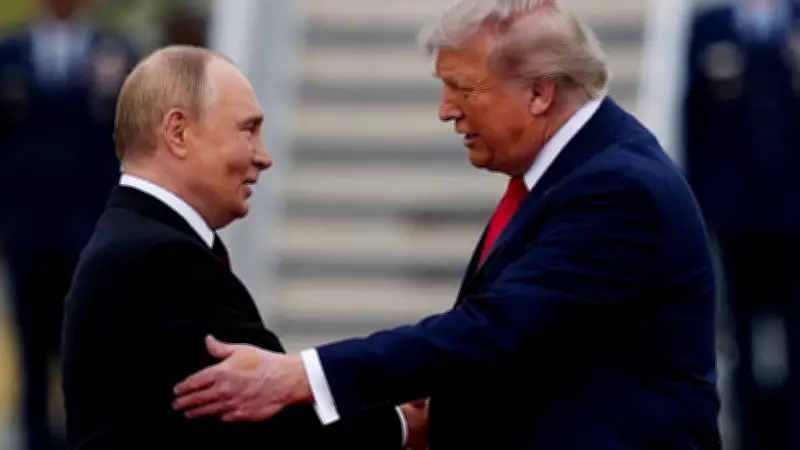
The landmark nuclear arms control agreement between the United States and Russia, known as the New START Treaty, officially expired on Thursday, creating a significant void in global security frameworks. This development occurs at a time of heightened international tensions, with no immediate replacement agreement in sight between the world's two largest nuclear powers.
End of an Era in Nuclear Diplomacy
The New START Treaty, originally signed in 2010, represented the final remaining nuclear agreement dating back to the Cold War era. This crucial pact had established verifiable limits on strategic nuclear arsenals, setting specific caps on deployed warheads, missiles, and launchers for both nations. With its expiration, there are now no active restrictions governing the number of strategic nuclear weapons that either country may possess for the first time in decades.
Key Provisions and Current Status
Under the terms of the New START Treaty, both nations had agreed to limit their deployed strategic nuclear warheads to 1,550 each. The agreement also included provisions for mutual inspections and monitoring of nuclear facilities, creating a framework for transparency and verification between the two nuclear superpowers.

According to the latest available data from the Stockholm International Peace Research Institute, as of January 2025, Russia maintains an estimated 5,459 nuclear warheads in its arsenal, while the United States possesses approximately 5,177 warheads. These figures represent the vast majority of the world's nuclear weapons, with the two nations collectively controlling about 90 percent of global nuclear warheads.
Diplomatic Stalemate and International Concerns
The treaty's expiration comes amid a diplomatic impasse between Washington and Moscow. Russian President Vladimir Putin had previously proposed a one-year extension to the agreement, but the Trump administration has not formally responded to this overture. In January, President Donald Trump indicated his willingness to let the treaty expire, telling the New York Times, "If it expires, it expires... We'll just do a better agreement."
The White House has maintained that President Trump would address the treaty situation "on his own timeline," offering little clarity about potential next steps in nuclear diplomacy with Russia.
International Reactions and Warnings
United Nations Secretary-General António Guterres expressed grave concern about the treaty's expiration, stating, "It could not come at a worse time – the risk of a nuclear weapon being used is the highest in decades." The UN chief urgently called for continued negotiations between the United States and Russia to develop "a successor framework that restores verifiable limits, reduces risks, and strengthens our common security."
Guterres emphasized the critical importance of maintaining nuclear arms control mechanisms, particularly given current global geopolitical tensions and the absence of alternative agreements.
Broader Nuclear Landscape and Future Prospects
The expiration of the New START Treaty raises significant questions about the future of global nuclear arms control. The Trump administration had previously expressed interest in expanding nuclear negotiations to include China, but Beijing has consistently rejected such overtures, citing its significantly smaller nuclear arsenal compared to both the United States and Russia.
China maintains an estimated 600 nuclear warheads, while other nuclear-armed nations include treaty-bound US allies France (approximately 290 warheads) and the United Kingdom (about 225 warheads).
Historical Context and Previous Extension
The New START Treaty had previously been extended for five years in 2021 during President Joe Biden's administration. That extension maintained the core provisions of the original agreement, including:
- Limiting deployed strategic nuclear warheads to 1,550 each
- Allowing up to 18 inspections of nuclear weapon sites annually
- Restricting deployed ballistic missiles to 800
This extension represented a bipartisan commitment to nuclear arms control, but the current expiration leaves the future of US-Russia nuclear relations uncertain.

Implications for Global Security
The absence of the New START Treaty creates a potentially dangerous security vacuum at a time when strategic competition between major powers is intensifying. Without the treaty's verification mechanisms and numerical limits, both nations face reduced transparency regarding each other's nuclear capabilities and intentions.
Experts warn that this development could potentially trigger a new nuclear arms race, as both countries might feel less constrained in developing and deploying advanced nuclear weapons systems. The situation underscores the fragile nature of international arms control agreements and the challenges of maintaining nuclear stability in an increasingly multipolar world.
As diplomatic channels remain open but unproductive regarding a replacement agreement, the international community watches closely for signs of how both nuclear superpowers will navigate this new phase in their strategic relationship. The coming months will likely prove crucial in determining whether a new framework for nuclear arms control can be established or whether the world will enter a period of unprecedented nuclear uncertainty.