

US Spent $3.4 Trillion to Counter China Without War, Now Washington Says 'No Same Mistake With India'
From 2012 to 2024, the United States quietly allocated a staggering $3.4 trillion to prepare for a militarized rivalry with China, according to a new report from Brown University's Costs of War project. This colossal expenditure surpasses the cost of two decades of war in Afghanistan, highlighting the scale of US strategic focus on Beijing's military rise without engaging in direct conflict.
Pentagon's Strategic Reshaping Around China
The report details how the Pentagon fundamentally reshaped its strategy, budgets, and global priorities to address China's growing military capabilities. This involved reallocating resources, developing new technologies, and strengthening alliances in the Indo-Pacific region, all while avoiding overt hostilities. The $3.4 trillion investment underscores a long-term, comprehensive approach to containing China's influence through economic, technological, and diplomatic means rather than traditional warfare.
Washington's New Approach Toward India
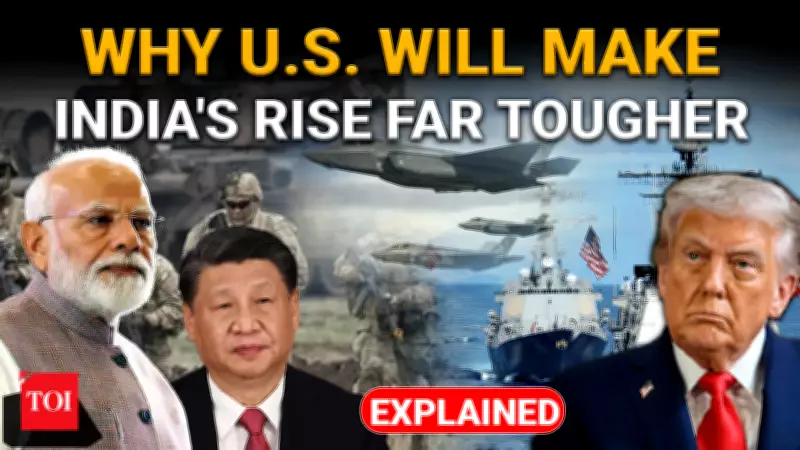
Now, US officials are signaling a significant shift in strategy, vowing not to repeat what they perceive as past mistakes that contributed to China's ascent as a military and economic superpower. Washington is adopting a tougher, more conditional stance toward India, explicitly linking technology transfers, defense deals, and supply chain collaborations to stricter strategic alignment. This move aims to ensure that partnerships with India are more tightly managed and aligned with US interests, preventing any potential for India to leverage US resources in ways that could challenge American dominance.

Implications for Managed Partnerships and Strategic Competition
This policy shift raises critical questions about the future of international relations. Is this the beginning of a new era characterized by managed partnerships and intensified strategic competition? By imposing stricter conditions on India, the US is likely seeking to foster a relationship that is more predictable and controllable, reducing the risk of unintended consequences. However, this approach could also strain bilateral ties, as India may resist perceived encroachments on its strategic autonomy.
The US strategy reflects a broader trend of great power competition, where economic and technological tools are increasingly used to shape geopolitical outcomes. As Washington recalibrates its approach, the dynamics between the US, China, and India will be crucial in determining the stability and structure of the global order in the coming decades.






