

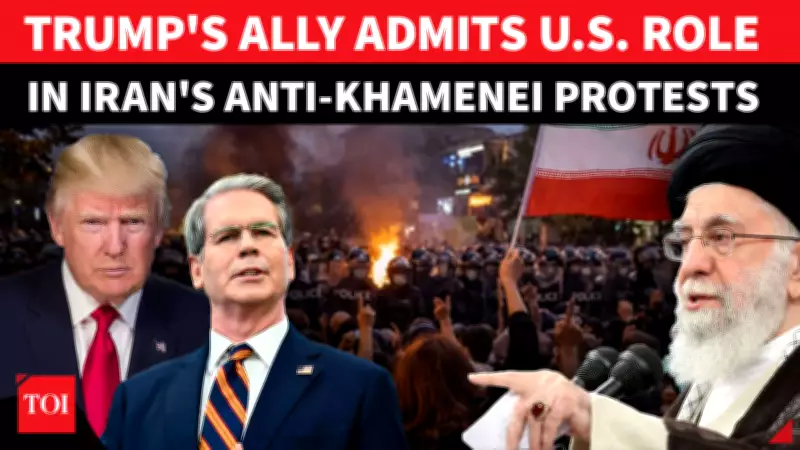
US Treasury Secretary Confirms Deliberate Economic Pressure on Iran
In a remarkable congressional testimony, United States Treasury Secretary Scott Bessent has publicly acknowledged that specific actions taken by the Treasury Department under the previous administration were designed to precipitate a severe economic crisis within Iran. This strategic move, Bessent revealed, was intended to destabilize the Iranian economy by engineering a critical shortage of US dollars.
Testimony Details Economic Warfare Strategy
Appearing before the Senate Economics Committee, Secretary Bessent provided a detailed account of the policy's execution and its devastating consequences. The Treasury's targeted financial measures successfully pushed one of Iran's largest and most significant banking institutions into complete bankruptcy. This collapse created a domino effect, severely crippling the nation's financial infrastructure.
Faced with the ensuing liquidity crisis and the plummeting value of its currency, the Iranian central bank was compelled to resort to massive money printing. This desperate measure triggered runaway hyperinflation, causing the price of essential goods and services to skyrocket beyond the reach of ordinary citizens. The economic despair directly fueled widespread public anger and frustration.

From Economic Collapse to Political Unrest
The testimony outlined how these calculated economic pressures were the primary catalyst for the mass anti-government protests that erupted across Iran. Bessent stated that the strategy was explicitly designed to drive Iranian citizens onto the streets in opposition to their government. The unrest reached its peak during late December and January, coinciding with the catastrophic plunge of the Iranian rial.
This period of intense domestic turmoil was further exacerbated by heightened international tensions. Then-President Donald Trump issued public threats against Iran, while fears of potential US military strikes led to the temporary closure of Tehran's airspace, adding a layer of geopolitical risk to the already volatile situation.
Key Revelations from the Testimony:- The US Treasury Department intentionally created a dollar shortage in Iran.
- This action led directly to the bankruptcy of a major Iranian bank.
- The Iranian central bank's response caused severe hyperinflation.
- Economic hardship was the main driver of nationwide anti-government protests.
- The crisis period saw direct threats from the US and military posturing.
This admission provides unprecedented official confirmation of how economic tools were wielded as instruments of foreign policy to apply maximum pressure on a geopolitical adversary, with significant and calculated humanitarian and political consequences.






