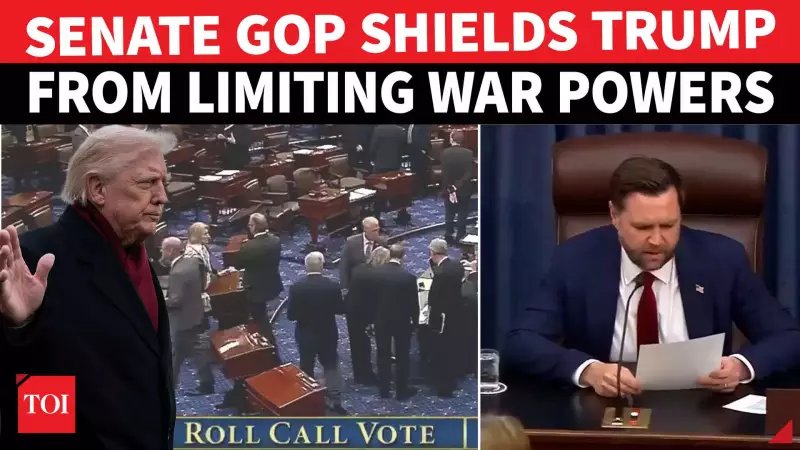
Vance Casts Decisive Vote as Senate Rejects Limits on Trump's Venezuela Military Moves
In a dramatic turn of events on Capitol Hill, Senate Republicans successfully thwarted a bipartisan initiative. This initiative aimed to restrict the Trump administration's military activities in Venezuela. The collapse of this measure handed President Trump a significant victory in foreign policy. The outcome underscores his firm command over the Republican Party.
Late-Night Drama Unfolds with Vice President's Intervention
Vice President JD Vance arrived at the Senate late Wednesday evening. His presence was crucial. He cast a tie-breaking vote that ultimately doomed the proposal. This last-minute intervention highlighted the high-stakes nature of the vote. It also demonstrated the administration's determination to maintain its authority.
Senators Josh Hawley and Todd Young initially supported the measure. However, they reversed their positions after facing intense pressure. The White House applied this pressure directly. President Trump and Secretary of State Marco Rubio personally reached out to sway the senators. Their flip-flop reveals the powerful influence Trump wields within his party.

Trump's Grip on GOP Remains Unshaken
This episode clearly shows Trump's readiness to confront party members who oppose his agenda. He does not hesitate to launch public attacks against dissenters. The failed vote serves as a stark reminder of his dominance in Republican politics. It signals that challenging his foreign policy decisions carries significant risks.
The measure's collapse has broader implications. It affects U.S. military strategy in Venezuela and potentially in other regions. The administration now has a freer hand to pursue its objectives without congressional constraints. This development could reshape America's approach to international conflicts.
Observers note that such political maneuvers are becoming increasingly common. They reflect the deep divisions within the Senate. They also highlight the ongoing struggle between executive power and legislative oversight. The outcome of this vote will likely influence future debates on war powers and presidential authority.