

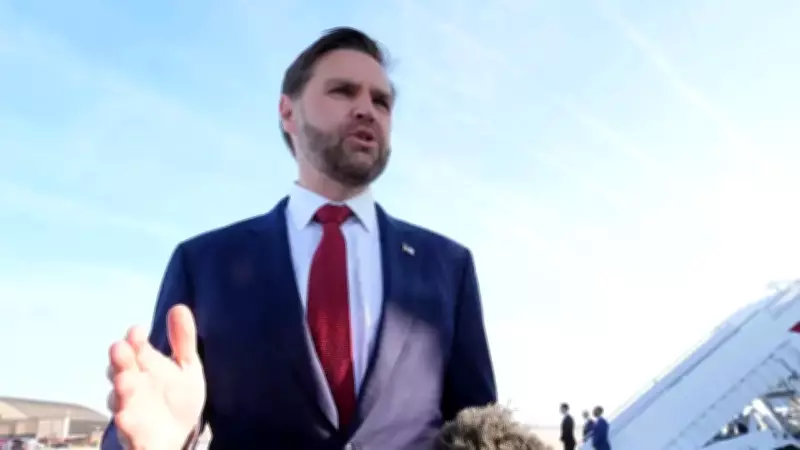
US Vice President JD Vance Issues Stern Warning to Iran Ahead of Critical Pakistan Talks
US Vice President JD Vance delivered a sharp and unequivocal warning to Iran on Friday, stating "don't play us," as he embarked on a crucial diplomatic mission to Islamabad, Pakistan. The high-stakes negotiations aim to broker an end to weeks of escalating conflict in the Middle East, with Vance leading the American delegation in what represents a pivotal moment for regional stability.
Vance Emphasizes Good-Faith Negotiations While Boarding Air Force Two
While boarding Air Force Two for the journey to Pakistan, Vice President Vance expressed cautious optimism about the upcoming talks. "We're looking forward to the negotiation. I think it's gonna be positive. We'll of course see," he remarked. Citing President Donald Trump's position, Vance elaborated on the US approach, stating, "As the President of the United States said, if the Iranians are willing to negotiate in good faith, we're certainly willing to extend the open hand."
However, Vance made it clear that any attempts at deception would be met with firm resistance. He added, "If they're gonna try and play us, then they're gonna find that the negotiating team is not that receptive. We're going to try to have a positive negotiation." This dual message of openness and resolve underscores the delicate balance the US delegation aims to strike in Islamabad.

White House Tasks Cautious Voice with Securing Conflict Resolution
The diplomatic visit follows the White House's decision to assign Vance—who has been perceived as one of the more cautious voices within the administration regarding the Middle East conflict—with the critical task of helping secure a resolution to the war that erupted six weeks ago. This assignment comes even as President Trump has publicly escalated rhetoric, including stark threats to wipe out Iran's "whole civilization."
Vance revealed that Trump has provided the delegation with "some pretty clear guidelines" on how the talks should proceed, though he did not elaborate on specific details. The delegation itself is a high-level team, including Special Envoy Steve Witkoff and former senior adviser Jared Kushner, signaling the importance Washington places on these negotiations.
Limited Details on Talk Structure Amid Fragile Ceasefire
The White House has offered limited information on whether the discussions in Islamabad will be direct or indirect. However, officials have confirmed that teams from the National Security Council, State Department, and Pentagon will provide support for the negotiations, ensuring a comprehensive governmental approach.
These talks occur against the backdrop of a fragile two-week ceasefire between the United States and Iran, which has created a narrow but crucial window for diplomacy. Despite this temporary calm, significant differences persist between the involved parties, threatening to derail any progress.
Key Sticking Points: Lebanon, Strait of Hormuz, and Regional Tensions
Iran has firmly insisted that any truce must include an immediate end to Israeli military operations in Lebanon. In contrast, both Israel and the United States have rejected linking these two issues, with Israeli Prime Minister Benjamin Netanyahu maintaining that operations against Hezbollah will continue unabated.
Simultaneously, Washington has demanded that Iran ensure the reopening of the Strait of Hormuz, a vital global shipping route that Tehran had restricted amid rising tensions. President Trump criticized Iran's handling of maritime traffic on Thursday, stating it was "doing a very poor job" of allowing oil tankers through and adding on social media, "That is not the agreement we have!"
Rare High-Level Engagement Amid Historical Tensions
Vance's trip marks a rare instance of high-level engagement between the United States and Iran. Direct contact between the two nations has been severely limited since the 1979 Islamic Revolution, with only occasional breakthroughs, such as the talks during the Obama administration.

Despite this diplomatic push, analysts caution that the path to a lasting agreement remains steep and fraught with challenges. Both sides are under considerable political pressure, and key unresolved issues—including regional conflicts and nuclear concerns—continue to loom large over the negotiations.
Islamabad Talks as Critical Test for Fragile Peace
For now, the Islamabad talks are being viewed as a critical test of whether the fragile ceasefire can hold and potentially evolve into a more durable and sustainable peace. The outcome will likely have profound implications for Middle East stability and international relations, making Vance's mission one of the most significant diplomatic endeavors in recent memory.





