The dramatic capture of Venezuelan President Nicolás Maduro by American troops has sent shockwaves beyond Caracas, delivering a stark reality check on the limits of China's much-vaunted global influence. The raid, which occurred just hours after Maduro met with senior Chinese diplomats, has exposed a critical gap between Beijing's strategic partnerships and its capacity to defend them.
A Stunning Blow to a Strategic Ally
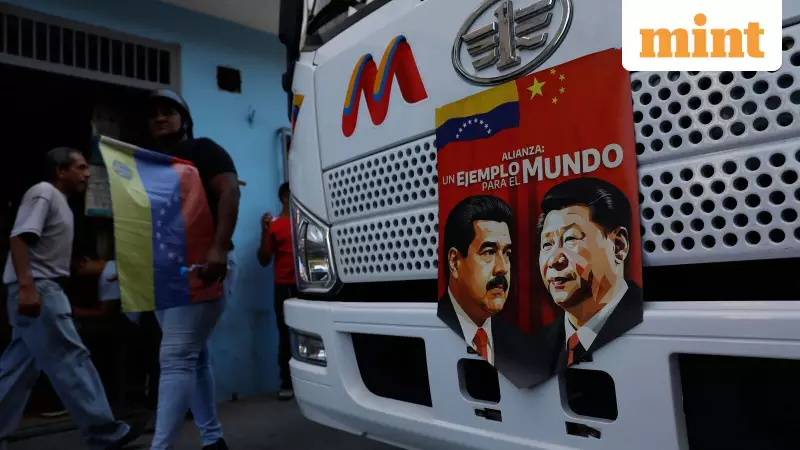
The final foreign delegation to meet Maduro before his unscheduled capture on 6 January 2026 was led by a special envoy from Chinese President Xi Jinping. The Venezuelan leader had just been extolling the strength of the "strategic relationship" between the two nations. This context made America's operation, ordered by President Donald Trump, a direct affront to Beijing. It demonstrated that the United States could, with apparent impunity, seize a leader considered one of China's closest allies in South America.
Some analysts immediately drew parallels to Taiwan, wondering if this action sets a precedent for China. However, the comparison is flawed. For China, reunification with Taiwan is a domestic issue, not one of international law. The primary constraint for Beijing is not legal but practical: the sheer military and logistical challenge of invading and subduing a vibrant, well-defended democracy like Taiwan, which is a far more complex objective than extracting a single autocrat.

The Economic Ties and Political Rhetoric
The depth of the Sino-Venezuelan relationship makes the episode particularly significant. According to data from AidData at the College of William and Mary, Venezuela received approximately $106 billion in Chinese loans and grants between 2000 and 2023, making it the largest recipient in South America. These funds largely flowed into energy and infrastructure projects. In recent years, the focus shifted to debt restructuring.
Politically, China had elevated Venezuela to an "all-weather" partnership in 2023, a top-tier diplomatic designation. Supporting Caracas was a cornerstone of China's advocacy for a "multipolar" world—one where American dominance is reduced. Venezuela was also a major buyer of Chinese military hardware. Yet, when the crisis arrived, China's support proved to be largely rhetorical. Beyond strong condemnations of the US for violating Venezuelan sovereignty, Beijing offered no tangible protection for Maduro.
A Reality Check for China's Global Ambitions
The event forces a recalibration of China's self-image as a true global counterweight to America. The US national security strategy, updated in December, explicitly vowed to deny "non-hemispheric competitors"—a clear reference to China—military footholds in the Western Hemisphere. China responded with its first Latin America policy paper in nearly a decade and even broadcast a computer-simulated wargame near Cuba and the Gulf of Mexico.
In reality, China's footprint in South America has grown significantly, alarming Washington. It operates an electronic surveillance site in Cuba, a deep-space station in Argentina, and holds strategic port assets in Panama. Chinese companies are major players in Brazil's nickel and electric vehicle sectors. Despite this economic penetration, the Venezuela raid has prompted Chinese thinkers like Jin Canrong of Renmin University to argue for more caution, emphasizing trade over politically sensitive investments to avoid direct confrontation with the US.
The ultimate lesson, as noted by experts like Margaret Myers of Johns Hopkins University, is one of irony. While China's narrative of offering an alternative to American power remains appealing to many in Latin America, Maduro's fate starkly illustrates that China currently lacks both the military capability and the political will to deliver a decisive counterpunch against American actions. For nations betting on Beijing's protection, it's a sobering wake-up call.