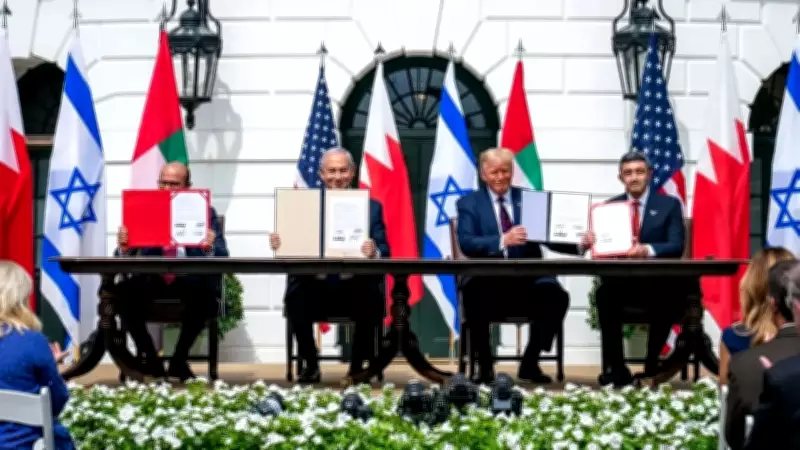
When the Abraham Accords made headlines in 2020, many hailed them as a transformative moment for the Middle East. With President Donald Trump's strong support from the White House, Israel and several Arab nations agreed to normalize relations for the first time. This opened the region to new partnerships in business, technology, tourism, and security—developments that seemed nearly impossible just a few years earlier.
However, amid the attention and coverage, a simple question lingered: Why "Abraham Accords"? Why name a modern diplomatic agreement after a figure from ancient religious history? Let us explore this in detail.
What Exactly Are the Abraham Accords?
The short answer is that the Abraham Accords emphasize shared roots. The name "Abraham" was not chosen by accident; it is rooted in religion, history, and symbolism. According to the U.S. Department of State, leaders wanted a name that reminded everyone of their common ancestry. Judaism, Christianity, and Islam all regard Abraham (or Ibrahim in Islam) as a key patriarch—a spiritual grandfather. While many saw this as a message of coexistence and common ground between Jews and Arabs, others dismissed it as clever branding, doubting that a name could overshadow decades of real-world conflict. Nevertheless, the symbolism took center stage, presenting the Accords as something larger than a typical political deal.

The first signing occurred at the White House in September 2020, with Trump bringing Israel, the United Arab Emirates, and Bahrain on board. Morocco and Sudan joined later. According to the Council on Foreign Relations, before this, most Arab countries had no formal ties with Israel, except for Egypt and Jordan, which had signed peace deals long ago. The Abraham Accords broke through that barrier, especially between Israel and Gulf Arab states.
The agreements covered more than diplomatic handshakes. Per Reuters, they opened doors in trade, travel, technology, security, investment, healthcare, and scientific research. Direct flights from Tel Aviv to Dubai became possible, and business deals and Israeli tourism to the Gulf followed.
For Trump, this was proof that a different approach could work in the Middle East. He and his team called it "historic," insisting it was more effective than endless peace summits. This message resonated with his supporters.
Why the Name "Abraham Accords"?
The name kept coming up in discussions. In the three Abrahamic religions, Abraham is the original patriarch. Jews trace their lineage to his son Isaac, Muslims to his son Ishmael, and Christians see Abraham as a model of faith. This common ancestry makes Abraham a spiritual bridge. Those behind the scenes said the name was chosen to remind everyone that Jews and Arabs are not doomed to be eternal rivals—they share a history, regardless of political tensions. While partly spin, it was also a genuine attempt to frame normalization as positive and identity-connected, not just cold political calculation.
In the Gulf, UAE officials repeated phrases like "shared values," "peaceful coexistence," and "a future built on understanding." Israeli politicians emphasized the power of choosing Abraham as a symbol everyone could relate to.
However, not everyone was pleased. Some viewed the accords as practical, bringing jobs, security, and stability. Others, particularly Palestinians and their supporters, were unconvinced. According to Al Jazeera, they argued the agreements sidestepped the Palestinian issue, normalizing relations without securing basic rights or statehood for Palestinians.
The Impact of the Abraham Accords
No one can deny the impact. Trade between Israel and the UAE soared. Per Reuters, deals emerged in high-tech, tourism, clean energy, and defense. Israelis visited Dubai as tourists, and Emirati investment flowed into Israeli companies. According to the Council on Foreign Relations, the Abraham Accords became part of Trump's legacy, with his administration citing them as proof that economic cooperation and direct deals could succeed where traditional peace talks stalled. Allies considered it a major foreign policy win.

What Is Happening Now?
The Abraham Accords remain in the conversation, with ongoing efforts to expand them. President Trump is now aggressively pushing for broader regional peace, linking the accords to negotiations with Iran. He has called on Saudi Arabia, Qatar, Pakistan, Turkey, Egypt, and Jordan to normalize ties with Israel immediately. The "Abraham Accords" brand now represents a framework for regional cooperation, tied to high-stakes diplomacy with Iran.
However, this ultimatum has met resistance. Pakistan publicly rejected the proposal, and other Arab leaders expressed discomfort, insisting that normalization requires a credible pathway to Palestinian statehood.
Ultimately, the choice of "Abraham" reflects modern diplomacy's hope that shared cultural roots can change politics. The Abraham Accords aim to connect rather than divide. Some celebrate them as a sign that the Middle East can move beyond conflict toward prosperity, while others argue that old wounds cannot be papered over, no matter how symbolic the name.