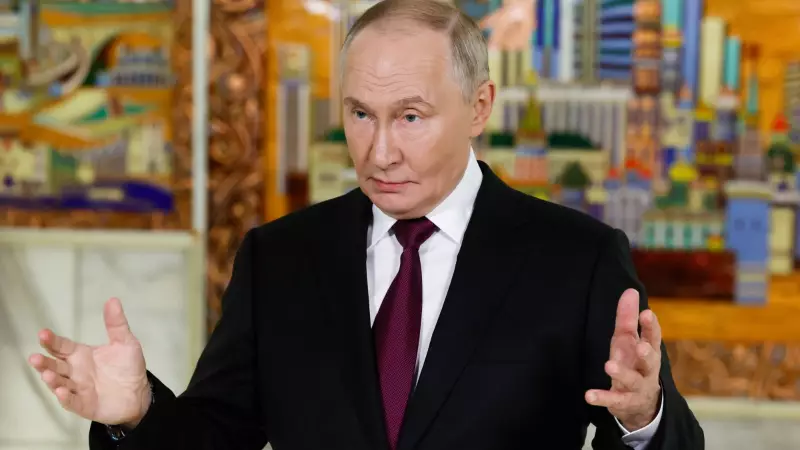
The recent visit of Russian President Vladimir Putin to India, hosted by Prime Minister Narendra Modi, has sent significant ripples through Western diplomatic circles. In an op-ed, Ram Madhav, president of the India Foundation and associated with the BJP, dissects the enduring puzzle of Putin for the West, arguing that a fundamental misunderstanding of his core principle—Russia always comes first—has led to a series of failed strategies.
The Unyielding Leader: A Thorn for the West
Madhav observes that the West has repeatedly tried and failed to subdue Putin. Following Russia's annexation of Crimea in 2014, the G8 suspended Moscow. Putin's response was not conciliation but a declaration of Russia's permanent exit from the group. The conflict in Ukraine, which escalated in 2022 over issues including the treatment of Russian-speaking populations in Donbas and Kyiv's NATO aspirations, led to severe sanctions and isolation. Yet, three years into the Ukraine conflict, Putin remains a formidable challenge for NATO.
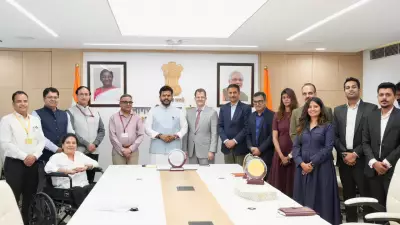
His strengthening ties with nations like China and India particularly irritate Western capitals. This frustration was palpable in an op-ed by a group of European ambassadors in New Delhi that attempted to advise India on its dealings with Russia. Madhav notes that just as military campaigns have not repressed Putin, intense diplomatic pressure did not deter Prime Minister Modi from hosting him. The visit underscored a shift towards a genuine multipolar world order and a rejection of duplicity in international relations.
The Making of a Derzhavnik: Putin's Statist Core
Madhav traces the roots of Putin's worldview to his formative years. The son of a World War II veteran, Putin rose from a modest Leningrad apartment to the Kremlin. After graduating in law from Leningrad State University, he spent 16 years as a KGB agent, including a stint in Dresden, East Germany, during the Glasnost era. This period, where his duty was to spy on NATO, seeded his deep-seated antipathy towards the alliance.
KGB training fostered a derzhavnik mindset—a belief in Russian greatness and staunch statism. Putin was profoundly affected by the Soviet Union's collapse, lamenting that nothing substantial rose to replace its lost position in Europe. This experience cemented his primary objective: preventing the disintegration of Russia. Facing separatist threats in Chechnya and Dagestan at the dawn of his presidency, he saw his mission as stopping the "Yugoslavisation of Russia," even at the cost of his political career.
India's Path: Strategic Autonomy and the Quest for Peace
In navigating its relationship with Moscow, Madhav asserts that the Indian leadership remains committed to its longstanding principle of ending wars. However, he emphasizes that building peace is a two-way street requiring greater mutual understanding. India's engagement is guided by strategic autonomy, a cornerstone of its foreign policy in an increasingly multipolar world.
The key takeaway, according to Madhav, is that the West's peril lies in its continued failure to comprehend that for Vladimir Putin, the Russian state is paramount. As Russian journalist Yevgenia Albats summarized, "Putin is an extreme statist. For him, state always comes first. Everything else... comes after this." Whether one approves of him or not, this Russia-first doctrine is the unwavering lens through which Putin views all actions on the global stage.