

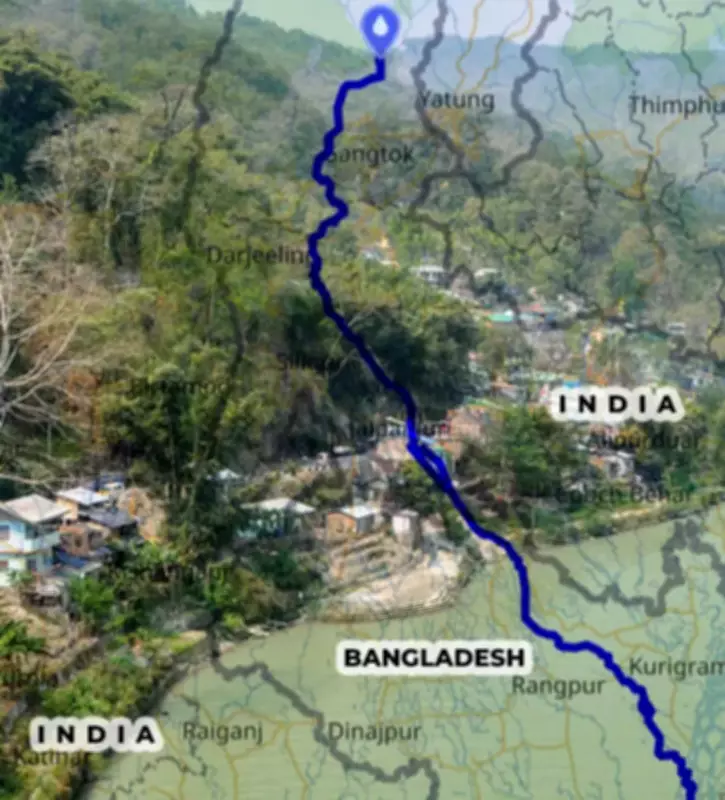
The long-standing dispute between West Bengal and the central government over sharing the Teesta river waters with Bangladesh may be nearing a resolution, following the recent defeat of Mamata Banerjee's Trinamool Congress in the state assembly elections. This political shift has created a rare opportunity for the federal government to move forward on the contentious issue.
Political Change Opens Door for Resolution
West Bengal has historically opposed the central government's efforts to sign a water-sharing agreement with Bangladesh, citing concerns over its own water needs. However, the electoral outcome has altered the state's political dynamics, potentially reducing resistance to the deal. The central government now sees a window to address the long-pending dispute, which has strained India-Bangladesh relations for years.
Bangladesh's Growing Urgency
The urgency to revive the stalled 2011 agreement has intensified under Bangladesh's new government led by Prime Minister Tarique Rahman. Dhaka is simultaneously pressing India to honor the earlier pact while also seeking support from China for the Teesta restoration project. This dual approach has raised concerns in New Delhi about Beijing's growing influence in the region.

China's involvement in the Teesta project adds a strategic dimension to the water-sharing dispute. Bangladesh's outreach to China for technical and financial assistance on the Teesta restoration project is seen as a move to pressure India into action. The central government is now weighing the geopolitical implications of delaying the deal further.
Historical Context of the Teesta Dispute
The Teesta water-sharing agreement was initially signed in 2011 during Prime Minister Manmohan Singh's visit to Dhaka, but it was never implemented due to opposition from West Bengal. The state government argued that the agreement would leave it with insufficient water for irrigation and other needs, especially during dry seasons. The dispute has remained a major irritant in bilateral ties, despite multiple rounds of talks between the two countries.
Experts believe that the changing political landscape in West Bengal could facilitate a breakthrough. The new state government is expected to be more cooperative with the Centre on water-sharing issues, potentially paving the way for a revised agreement that addresses both parties' concerns.
Strategic Implications
Reviving the Teesta deal is not just a bilateral water-sharing issue but also a strategic imperative for India to counter China's growing influence in South Asia. Bangladesh's pivot toward Beijing for infrastructure projects has alarmed New Delhi, which views the Teesta dispute as a key factor driving Dhaka closer to China.
By resolving the water-sharing issue, India hopes to strengthen its ties with Bangladesh and reduce the latter's dependence on Chinese support. The central government is reportedly exploring a new framework that balances West Bengal's water needs with Bangladesh's demands, possibly including provisions for water storage and efficient usage.
As the political landscape shifts, all eyes are on how the central government will navigate the complex interplay of domestic politics and regional geopolitics to revive the Teesta water deal. The outcome could have far-reaching implications for India-Bangladesh relations and the broader strategic balance in the region.






