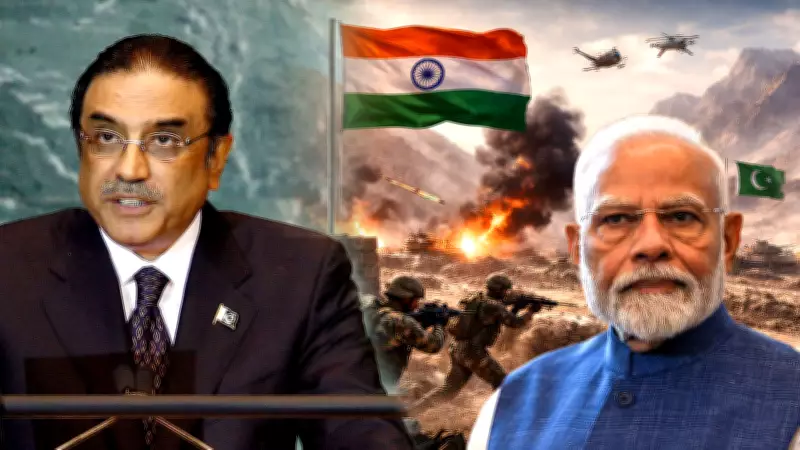
Pakistan President Asif Zardari Raises War Alarm, Advocates Dialogue with India
In a statement that has reignited regional tensions, Pakistan President Asif Ali Zardari has publicly claimed that India is actively preparing for another war against Pakistan. This provocative assertion comes several months after the devastating Pahalgam terror attack, which had already strained diplomatic relations between the two nuclear-armed neighbors.
Parliamentary Address Amid Political Turmoil
President Zardari made these remarks during a joint session of Pakistan's Parliament, where he alleged that New Delhi is deliberately moving towards a conflict scenario with Islamabad. His speech was delivered against a backdrop of noisy scenes and political divisions within the parliamentary chamber, highlighting the domestic challenges facing Pakistan's leadership.
Interestingly, while raising the specter of war, Zardari simultaneously advocated for diplomatic engagement. He explicitly urged India to step away from confrontation and instead engage in meaningful negotiations aimed at achieving lasting regional stability. This dual approach of warning about military preparations while calling for talks presents a complex diplomatic posture.

Historical Context and India's Consistent Position
India has consistently rejected similar claims from Pakistani leadership in the past, maintaining that such allegations are unfounded and counterproductive to peace efforts. New Delhi has repeatedly reiterated its commitment to peaceful relations while simultaneously maintaining a firm stance against cross-border terrorism and security threats.
The timing of Zardari's comments is particularly significant as they follow the Pahalgam terror attack, which India has attributed to Pakistan-based militant groups. This incident had already created substantial diplomatic friction, with India demanding accountability and action against terrorist elements operating from Pakistani territory.
Regional Implications and Stability Concerns
Zardari's war preparation claims, coupled with his dialogue appeal, create a paradoxical situation for regional diplomacy. On one hand, they risk escalating tensions through inflammatory rhetoric about military intentions. On the other hand, the explicit call for negotiations offers a potential pathway for de-escalation.
The international community closely monitors such statements given the nuclear capabilities of both nations and the history of conflicts between India and Pakistan. Regional stability in South Asia remains fragile, with diplomatic channels often strained by mutual accusations and security concerns.
As both nations navigate this latest diplomatic challenge, the coming weeks will reveal whether Zardari's dual message of war warnings and dialogue appeals leads to renewed confrontation or opens doors for constructive engagement. The balance between maintaining national security and pursuing diplomatic solutions continues to define one of the world's most complex bilateral relationships.