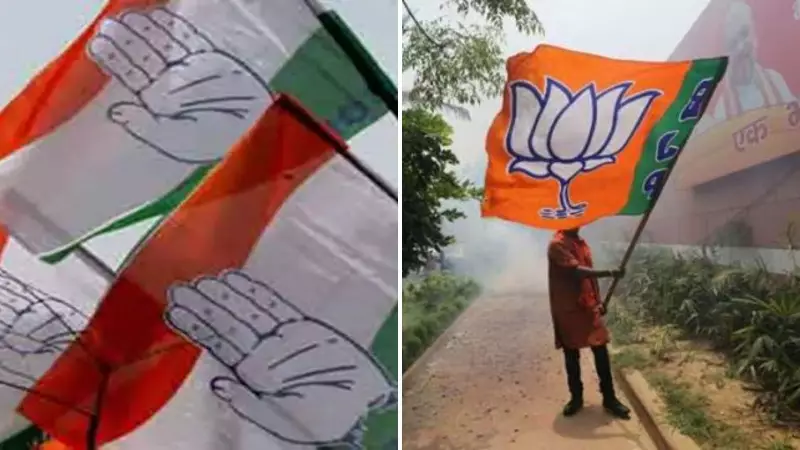
The year 2026 is poised to be a watershed moment for Indian politics, packed with high-stakes electoral battles, contentious legislative proposals, and significant leadership transitions. This period of reckoning will test the mettle of major political players, including the ruling Bharatiya Janata Party (BJP) and the principal opposition, the Indian National Congress.
A Crucial Electoral Cycle Kicks Off
The political calendar for 2026 begins with a significant test in Maharashtra. The Brihanmumbai Municipal Corporation (BMC) elections are scheduled for January 15, alongside polls for 28 other municipal corporations in the state. Control of India's wealthiest civic body holds immense symbolic and administrative power, setting the tone for the year ahead.
Following these local polls, the first half of 2026 will witness a series of high-profile Assembly elections. Voters in West Bengal, Assam, Tamil Nadu, Kerala, and the union territory of Puducherry will head to the polls. For the Opposition, which is in urgent need of political momentum, this electoral cycle is critical. The BJP, having regained momentum after a subpar 2024 Lok Sabha performance with wins in states like Delhi, Haryana, Maharashtra, and Bihar, aims to extend its winning streak.

State-by-State Battleground Analysis
West Bengal: The state is gearing up for one of the most closely watched contests. The BJP is mounting an aggressive challenge to Chief Minister Mamata Banerjee, seeking to end the Trinamool Congress's (TMC) three-term rule. However, the TMC's formidable grassroots network and Banerjee's political capital remain significant hurdles. The party also retains the loyalty of an estimated 30% of the Muslim electorate. The Left and Congress, who failed to win a single seat in 2021, face an uphill task to regain relevance.
Tamil Nadu: The traditional bipolar contest between the Dravidian majors—the DMK and AIADMK—faces a new variable. The entry of popular film star Vijay into politics has added uncertainty. Key questions loom: Will he split the Opposition vote? Can the ruling DMK's welfare-driven governance secure a second consecutive term for Chief Minister M K Stalin? The April polls will provide the answers.
Assam: The Congress attempts a comeback after a decade in opposition, but faces a strong BJP alliance with the Asom Gana Parishad (AGP) and the United People’s Party Liberal (UPPL). The Congress has formed a broad coalition including left parties and regional outfits, but its decision to not align with the All India United Democratic Front (AIUDF) could lead to a division of Muslim votes, potentially weakening its prospects.
Kerala: The state may witness a political turning point. Recent local body results suggest the ruling Left Democratic Front (LDF) is on shaky ground, while the Congress-led United Democratic Front (UDF) is buoyant. A defeat for the Left would mean India has no Communist Chief Minister for the first time in nearly five decades. The BJP is also aiming for incremental gains, targeting a double-digit seat tally.
Contentious Legislative Agenda and Key Deadlines
Beyond elections, 2026 will be dominated by heated legislative debates. The Narendra Modi government is expected to push for the synchronisation of Lok Sabha and Assembly elections, known as "One Nation, One Election." Parliament may consider at least two polarising Constitution Amendment Bills: one for synchronised polls and another to enable the removal of Union or state ministers facing serious criminal charges after 30 days of detention. Passing these requires a special majority, setting the stage for intense negotiation.
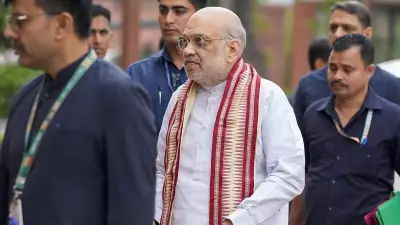
On the security front, Union Home Minister Amit Shah has set a March 2026 deadline to eliminate Left-wing extremism (Naxalism). The past year has seen intensified operations and senior Naxal leader killings in Chhattisgarh and neighbouring states.

A landmark administrative exercise will also begin: India's decadal Census will start in 2026 after a 16-year gap. This will be the first fully digital Census and the first since Independence to include a caste count. The houselisting phase is scheduled from April to September 2026. The subsequent delimitation exercise, mandated after this Census, is already sparking tensions, with southern states fearing a loss of parliamentary representation if population becomes the sole criterion.
Internal Transitions and Political Manoeuvres
Major parties will see internal changes. The BJP is set to formally install a new national president in the first half of 2026, with the newly-appointed national working president and Bihar minister, Nitin Nabin, expected to take the helm. His challenge will be to sustain the party's electoral momentum and expand its footprint in eastern and southern India.
The Opposition INDIA bloc faces tests of internal cohesion, especially during the Kerala elections where its major constituents, the Left and Congress, are direct competitors. The Congress has signalled a focus on economic issues, planning a nationwide campaign around the replacement of the MGNREGA with the G Ram G law 2025.
Additionally, the biennial elections to the Rajya Sabha for 59 seats across 17 states in April and June 2026 are likely to marginally benefit both the BJP and Congress, with the ruling NDA expected to make more significant gains based on current Assembly strengths.
In summary, 2026 emerges as a defining year where the outcomes of fierce state elections, the fate of transformative legislative ideas, and the success of leadership transitions will collectively chart the future course of Indian politics and governance.