

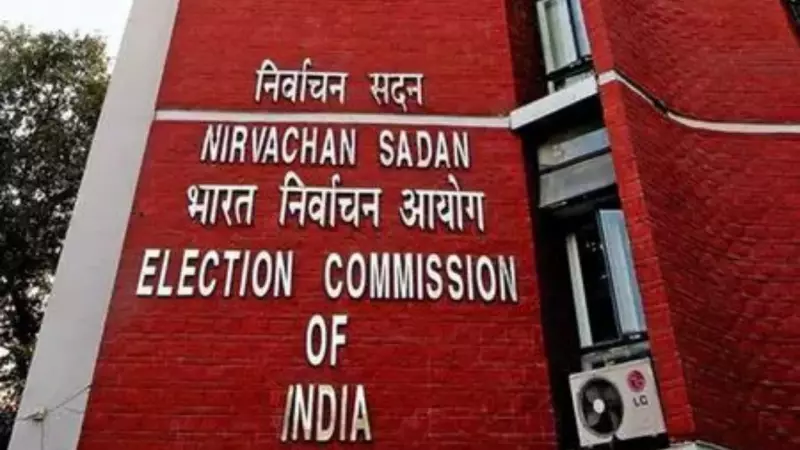
The Election Commission of India has taken a significant step to oversee the contentious Special Intensive Revision (SIR) of electoral rolls in West Bengal by appointing four additional Special Roll Observers (SROs). This move aims to reinforce transparency and accuracy in the process, which has been ongoing for over two months and has sparked severe criticism from the state's leadership.
Who Are The New Observers And What Is Their Mandate?
According to an official notification, the four appointed observers are Ratan Biswas, Vikas Singh, Sandeep Rewaji Rathod, and Dr. Shailesh. Their appointments are effective immediately and will remain until further orders. An official stated that the SROs have been tasked with closely monitoring the revision and verification exercises on the ground.
Their primary role is to ensure strict adherence to statutory instructions and flag any deviations for immediate corrective action. The Commission stated that these observers are intended to guarantee uniform implementation of rules and bolster public confidence in the integrity of the voter list. They will work alongside other deployed observers at various levels.

Mounting Criticism and Human Cost
The revision drive, however, has been mired in controversy. West Bengal Chief Minister Mamata Banerjee has launched a sharp critique, directly linking the process to human casualties. In a letter to Chief Election Commissioner Gyanesh Kumar, she alleged that the SIR has led to 77 deaths, with four attempts to suicide and 17 persons falling sick requiring hospitalisation.
Banerjee described the exercise as "relentless harassment" of ordinary citizens, asserting that it places undue pressure and scrutiny on voters. She emphasized that even the elderly, infirm, and seriously ill are being compelled to participate. A major point of contention is the centralisation of hearings, forcing many voters to travel 20–25 kilometres to attend, rather than having decentralised, accessible centres.
The Chief Minister argued that an exercise meant to be the foundation of democracy is causing extreme distress. Reports from the ground also indicate that the intense workload has placed extreme pressure on Booth Level Officers (BLOs), with several reportedly dying from health complications or suicide.
EC's Response and Steps Forward
Amid the growing outcry, the poll panel has announced operational adjustments. Officials stated that, taking into account geographical challenges and voter accessibility, 160 additional SIR hearing centres have been established, mostly in North Bengal. This move appears to be a direct response to complaints about the hardship faced by voters in reaching centralised locations.
The appointment of the four special observers is seen as another measure by the Election Commission to address concerns about the process's implementation and to ensure its credibility. The official rationale remains strengthening oversight and ensuring the final electoral roll is accurate and trustworthy ahead of future elections.
The situation presents a stark contrast: while the EC is instituting more layers of supervision for transparency, the state government highlights a severe human toll and procedural rigidity. The effectiveness of the new observers in mitigating these issues and ensuring a fair process without further hardship will be closely watched.






