

Assam Assembly Elections 2026: A Crucial Battle for 126 Seats
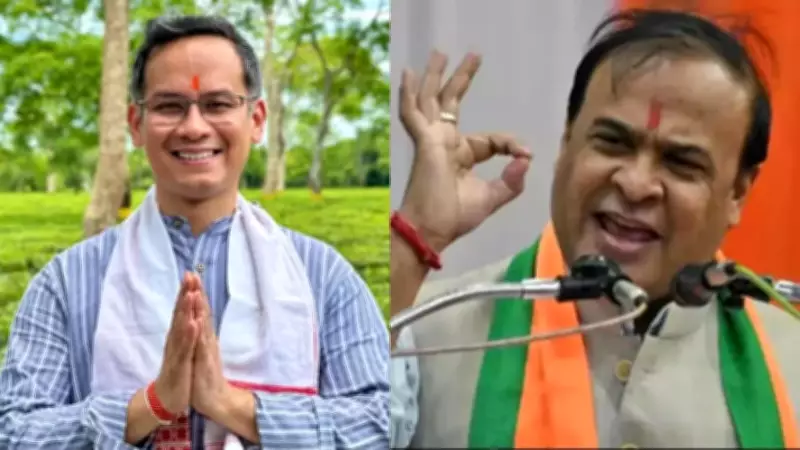
Assam is poised for a pivotal electoral showdown on Thursday, April 9, as voters across the state head to the polls to decide the fate of 126 assembly seats. The contest has crystallized into a direct confrontation between Chief Minister Himanta Biswa Sarma, leading the BJP-led alliance, and Gaurav Gogoi at the helm of the Congress party. Sarma is vying for a rare third consecutive term for the ruling coalition, while Gogoi's Congress aims to capitalize on anti-incumbency sentiments and stage a political resurgence. In a 126-member assembly, where 64 seats constitute the majority threshold, the outcome is unlikely to be swayed by a single overarching wave but rather by a complex interplay of regional and state-specific issues.
Top 5 Factors That Could Determine the May 4 Verdict in Assam
1. The Delimitation Domino Effect
This assembly election marks the first since the 2023 delimitation exercise, which redrew constituency boundaries based on the 2001 Census. The restructuring has significantly altered the political landscape, reducing minority-dominated seats from approximately 35 to 23. This shift has bolstered the influence of indigenous and tribal communities, potentially benefiting the BJP, which leverages identity politics, welfare initiatives, and governance delivery. In areas like the Barak Valley, constituency mergers and reclassifications have forced established political figures to adapt, disrupting long-standing vote-bank dynamics that historically favored the Congress and the All India United Democratic Front. Consequently, this election is being contested on a new electoral map, fundamentally altering the arithmetic.
2. The 'Infiltration' Narrative
Layered atop this is Assam's persistent identity debate, now recalibrated for the 2026 elections. The Citizenship Amendment Act (CAA) and the National Register of Citizens (NRC) remain central themes, though they have transitioned from mass protests to embedded political narratives. The BJP has framed its stance as a defense of indigenous identity and land rights, highlighted by controversial eviction drives in districts such as Darrang and Nagaon. Conversely, the opposition accuses the government of weaponizing these issues for polarization, arguing that such measures exacerbate social divisions rather than resolve them.

3. The 'Orunodoi' Economy
The BJP's 'double engine' governance model heavily relies on Direct Benefit Transfers (DBT) to counter anti-incumbency. Chief Minister Himanta Sarma's electoral strategy is anchored in welfare delivery, particularly through the flagship Orunodoi scheme, which provides monthly financial assistance to over 26 lakh women beneficiaries. This initiative has cultivated a loyal base of 'labharthi' voters. Additional programs like Atmanirbhar Asom have reinforced this outreach. In contrast, the Congress and Raijor Dal critique the 'cost' of these schemes, pointing to the state's mounting debt and recruitment 'paper leak' scandals as evidence that welfare masks a lack of sustainable job creation.
4. The Tribal & Tea Garden Swing
Beyond statewide narratives, decisive swing regions will play a critical role. The tea tribes, influencing nearly 35 to 40 constituencies, remain a powerful yet unpredictable voter bloc. Both major parties have intensified outreach efforts, but uniform consolidation is not assured. Similarly, the Bodoland Territorial Region has gained political weight post-delimitation, with seats expanding from 11 to 15. The BJP's alliance with the United People's Party Liberal (UPPL), coupled with peace accords with Bodo groups, is promoted as a stability measure. However, shifts in these regions could tilt multiple seats, making them a focal point of electoral strategy.

5. Fragmented Opposition
The arithmetic of the 'anti-BJP' vote will be a final dealbreaker. Currently, this space is fragmented among the Congress, AIUDF, Raijor Dal, and the Assam Jatiya Parishad. Whether this division ultimately benefits Assam remains uncertain. In the 2021 elections, vote fragmentation favored the BJP, enabling the ruling alliance to secure 75 seats. For Gaurav Gogoi, this election tests his leadership and ability to present a united Congress front, especially after several party leaders defected to the BJP pre-election. For Himanta Biswa Sarma, the strategy involves maintaining opposition divisions while consolidating gains across diverse regions.
Conclusion: A Referendum on Political Models
As Assam votes tomorrow, this election may be viewed as a referendum on whether the BJP's blend of identity politics, welfare expansion, and strong leadership has become the state's dominant political model, or if there is room for a revival of opposition-led governance. The verdict on May 4 will reveal what matters most to Assam's electorate, shaping the state's political trajectory for years to come.





