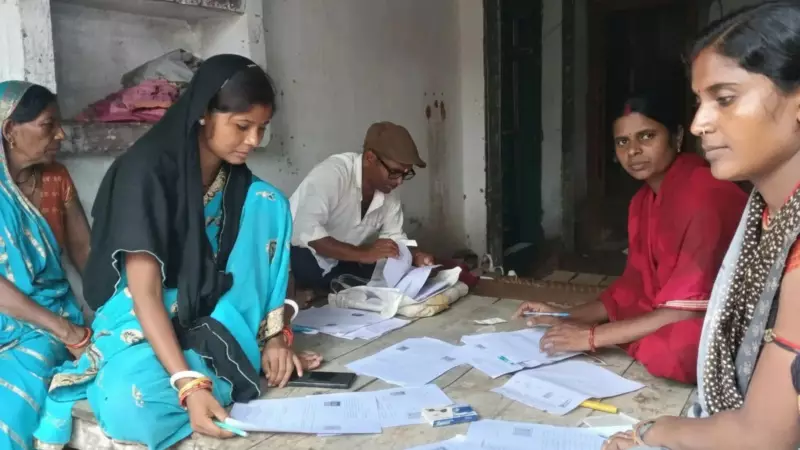
A major controversy has erupted in West Bengal over the ongoing Special Intensive Revision (SIR) of electoral rolls, with state service officers raising serious concerns about potential large-scale, "system-driven" deletions of voters' names. The core issue is the alleged bypassing of the statutory authority of Electoral Registration Officers (EROs) in the process.
ERO Authority Undermined, Claims Officers' Association
The West Bengal Civil Service (Executive) Officers' Association has formally flagged this concern in a letter to the state's Chief Electoral Officer, Manoj Agarwal, with a copy sent to the office of Chief Election Commissioner Gyanesh Kumar. The letter, dated December 27, 2025, highlights the "suo motu system-driven deletion of electors from the draft electoral rolls... bypassing the statutory role of EROs."
According to the Representation of the People Act, 1950, the ERO is the sole competent authority to issue notices and decide on an elector's eligibility, including questions of citizenship. However, in the current SIR process, notices are being generated automatically through the Election Commission of India's (ECI) centralised portal, without the EROs initiating them.

An ERO from Nadia district, speaking anonymously, confirmed this process. "We have an option/button for notice generation. When we use it, notice is automatically generated. At present, the software generates notices for voters who are not mapped with the 2002 SIR data," the officer explained, adding that for voters with 'logical discrepancies', the ECI alone decides who is called for a hearing.
Fear of Blame and Lack of Transparency
Saikat Asraf Ali, General Secretary of the association, emphasized that the common people affected by deletions would blame the local EROs, who are kept out of the process. "We also don't want any genuine elector's name to be deleted," Ali stated, urging the ECI to follow the law transparently and clarify that EROs are not responsible for these system-initiated actions.
The association's letter argues that this practice infringes upon the natural rights of electors who might be eligible but were absent during enumeration. It cites Section 22 of the RP Act, 1950, which mandates that a voter's name can only be deleted on specific grounds like ceasing to be a resident, and that the ERO must give the person a reasonable opportunity to be heard.
Scale of the Revision and Official Response
Hearings for the SIR in West Bengal began on December 28, 2025. State CEO Manoj Agarwal had earlier stated that the process would first cover approximately 31 lakh electors who could not be mapped with the 2002 electoral roll data. Subsequently, scrutiny would begin for voters flagged with "logical discrepancies," which number around 1.36 crore unique entries.
An official from the West Bengal CEO's office countered the officers' concerns, stating that detailed instructions were provided to all District Election Officers, EROs, and Assistant EROs in October 2024, before the SIR work commenced. "Why are the officers raising such questions now?" the official asked.
This development in West Bengal follows a similar pattern reported in Bihar, where EROs found "pre-filled notices" on the ECI portal bearing their names but not generated by them. On the same day the Bengal officers sent their letter, the ECI issued fresh instructions to 12 states and UTs undergoing SIR, directing verification of documents submitted by electors within five days—a step reportedly not taken in Bihar.
The officers' association has requested clear instructions to ensure EROs can function with the authority and clarity required by law, especially since the final electoral rolls will be published under their signature and seal.