

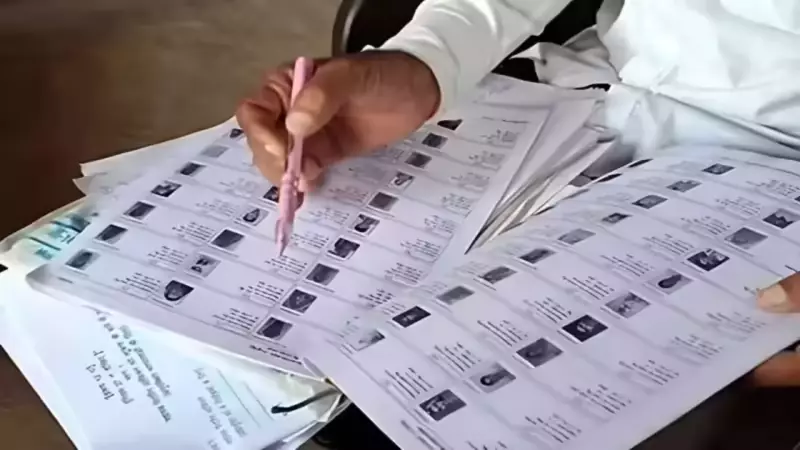
In a significant move aimed at boosting electoral inclusion, the Election Commission of India (ECI) has given its formal approval to accept employment records from tea gardens and cinchona plantations as valid proof of identity and residence for voter registration. This decision is set to impact seven districts in the crucial region of North Bengal.
Official Nod for Plantation Records
The landmark decision came on Sunday, following a proposal sent by West Bengal's Chief Electoral Officer (CEO), Manoj Agarwal. The Commission, in a letter signed by its Under Secretary, Shakti Sharma, communicated that it had "no objection" to the use of these specific employment documents for the purpose of preparing and revising the Summary Revision of the electoral rolls, commonly known as SIR.
This step directly addresses a long-standing issue faced by a large segment of plantation workers in the region. Historically, many workers in these estates do not possess any of the standard documents notified by the Election Commission, such as Aadhaar cards, passports, or driving licenses. Consequently, a vast number of them were excluded from the electoral rolls during the last major revision in 2002.

Districts Set to Benefit
The approval specifically covers the seven North Bengal districts of Darjeeling, Kalimpong, Jalpaiguri, Cooch Behar, Alipurduar, North Dinajpur, and South Dinajpur. These areas are home to a dense population reliant on the tea and cinchona plantation industry. The EC's directive means that the official employment records maintained by the garden or plantation management can now be presented as legitimate documents to establish an individual's identity and local residence for voter enrolment.
Verification Process and Broader Impact
Prior to this official clearance, Election Commission officials had indicated that the verification of claims based on these plantation records would be carried out meticulously by the respective District Election Officers (DEOs). This local-level verification is crucial to maintain the integrity of the electoral roll while facilitating the inclusion of eligible voters.
The decision is widely seen as a major push for democratic participation. It empowers a historically marginalized workforce, ensuring their right to vote is not hindered by a lack of conventional documentation. By formally recognizing their employment records, the Election Commission has effectively bridged a critical administrative gap, potentially adding thousands of new voters to the rolls in a politically significant region.
This move underscores the EC's adaptive approach to ensuring no eligible citizen is left out of the electoral process due to documentation challenges. It sets a precedent for addressing similar inclusion gaps in other plantation-based economies across the country.






