

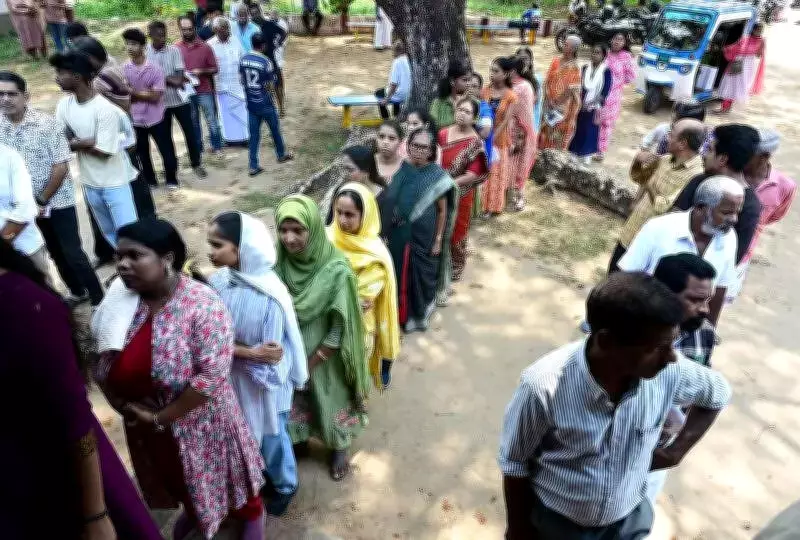
Kerala's Electoral Turnout Climbs to 77.3%, Driven by Voter List Cleanup
In a notable shift from previous elections, Kerala has witnessed a rise in voter participation, with the polling percentage reaching 77.3% by approximately 7 PM, compared to the 2021 average of 76.7%. This increase is being attributed to the implementation of the Special Intensive Revision (SIR), a targeted initiative aimed at ensuring a fair and accurate voters' list by excluding names of deceased individuals and those who have migrated to other regions.
Impact of Special Intensive Revision on Polling Numbers
According to D Dhanuraj, chairman of the Centre for Public Policy Research (CPPR), the SIR has played a pivotal role in boosting the voter turnout. "There are chances that the SIR helped increase the polling percentage. There may be an increase of around 2-3% due to the changes in the voters' list," Dhanuraj explained. He further noted that in past elections, when ineligible or deceased names were retained, the turnout appeared lower. "When such names are omitted, the polling percentage would automatically go up." Dhanuraj emphasized that a true electoral wave would only be evident if the turnout exceeded 80%.
Voter Behavior and Perceptions Driving Participation
The cleanup of the electoral list has also influenced voter behavior, with many citizens feeling compelled to exercise their franchise to maintain their registration. "Several Keralites from Delhi came back home on Wednesday only to cast their votes. Many think that if they don't cast their votes even after the Election Commission brings out a revised voters list following the SIR, their names may be deleted in the future," Dhanuraj stated. This concern has motivated a segment of voters, who might otherwise avoid voting due to inconveniences, to participate actively, thereby contributing to the higher poll percentage.

Political Interpretations of the Increased Turnout
Political parties have offered differing interpretations of the rise in voter turnout. The United Democratic Front (UDF) views the surge as a potential indicator of their victory, based on the general perception that increased polling benefits their front. Historically, it was believed that last-minute voters tended to favor the UDF. Conversely, the Left Democratic Front (LDF) attributes the percentage increase solely to the changes implemented through the SIR, suggesting it reflects administrative adjustments rather than a political shift.
The ongoing analysis underscores how electoral reforms, such as the Special Intensive Revision, can significantly impact voter engagement and polling outcomes in Kerala's democratic processes.






