

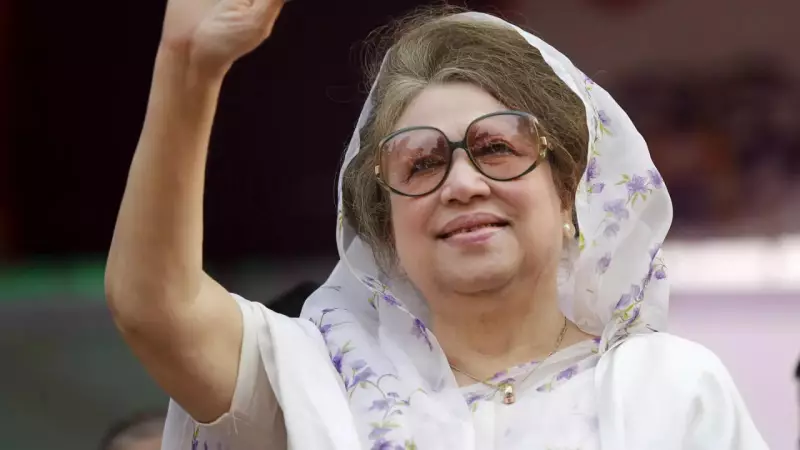
The death of former Prime Minister Khaleda Zia marks the end of a dominant and deeply polarising era in Bangladesh's political history, throwing the country's approaching February 2026 general elections into uncharted territory. For over three decades, Zia was an unparalleled electoral force, a defining figure whose absence, coupled with her rival Sheikh Hasina's exile, creates a historic vacuum.
An Unbeaten Electoral Legacy and the Rivalry That Defined a Nation
Khaleda Zia's political journey was forged in Bangladesh's struggle for democracy. Emerging as a central figure in the resistance against the military dictatorship of Hussain Muhammad Ershad after his 1982 coup, she endured house arrest and boycotted polls she deemed illegitimate. Her steadfast opposition paid off after Ershad's fall in 1990.
In the landmark February 1991 election, Zia led the Bangladesh Nationalist Party (BNP) to victory, becoming the country's first elected woman prime minister and restoring the parliamentary system. What followed was an unmatched record: from her first victory in 1991 until her final contest in 2008, she never lost a parliamentary election. Contesting 23 constituencies across five general polls in places like Bogura, Feni, Dhaka, and Chattogram, she emerged victorious every single time.

Her career became inextricably linked with her lifelong rival, Sheikh Hasina, daughter of independence leader Sheikh Mujibur Rahman. Their alternating power, mutual accusations of corruption and authoritarianism, and rival street movements defined and polarised Bangladeshi politics for more than 30 years. BNP leaders recently honoured Zia with the title 'Mother of Democracy'.
Controversy, Conviction, and a Final Acquittal
Zia's later years were marked by legal battles and confinement. After stepping down in 2006, a period of unrest led to a military-backed interim government that arrested both Zia and Hasina on graft charges. Zia was convicted in 2018 in cases she and the BNP decried as politically motivated.
Ill health kept her out of the public eye for years. Following Hasina's ouster in 2024, Zia was finally permitted to travel to London for medical treatment, returning to Dhaka earlier this year. In a symbolic move, the BNP nominated her for multiple constituencies for the coming election even as she lay gravely ill. In a dramatic turn, Bangladesh's Supreme Court acquitted her in the final corruption case in January 2025, clearing her path to contest again—a chance her death has now foreclosed.
A Sympathy Wave, a Returning Son, and a Reshaped Election
Zia's death introduces a powerful emotional undercurrent into the 2026 electoral battle. History shows such moments matter, as seen when Benazir Bhutto's 2007 assassination propelled her party to victory in Pakistan. Her passing could consolidate the BNP's base, boost turnout, and frame the election as a referendum on her legacy after years of the party claiming suppression.
The political vacuum is profound. For the first time since the end of military rule in the early 1990s, neither Zia nor Hasina is on the ballot. Hasina remains in exile, and her Awami League has been barred from contesting.
This coincides with the return of Zia's son, Tarique Rahman, after 17 years in exile. Now positioning himself as the BNP's undisputed leader, he has completed voter registration, plans to contest from Bogura, and has drawn massive crowds by invoking themes of liberation and democratic restoration.
The central question now is whether Tarique Rahman can convert public sympathy into votes and transform symbolic capital into credible governance. While past allegations still follow him, the BNP enters the 2026 race not as a struggling opposition but as a party carrying the heavy emotional weight of its founder's history.






