Kolkata High Court Panel to Intensively Scrutinize 60 Lakh Pending SIR Complaints
The scrutiny and final disposal of approximately 60 lakh special intensive revision (SIR)-related complaints pending before the high court-appointed panel in Kolkata will not be a mere tabletop exercise. This process is set to involve detailed verification and potential judicial intervention to ensure the integrity of the electoral roll.
Judicial Magistrates May Directly Question Booth Level Officers
Assistant electoral registration officers (AEROs) or supervisors have reportedly alerted booth level officers (BLOs) that judicial magistrates may also call them to learn about the cases marked in three specific categories. These categories include ‘no record found’, ‘logical discrepancy’, and ‘no mapping’. If judges are convinced about the authenticity of voters based on this feedback, their names may find a place in the final electoral roll.
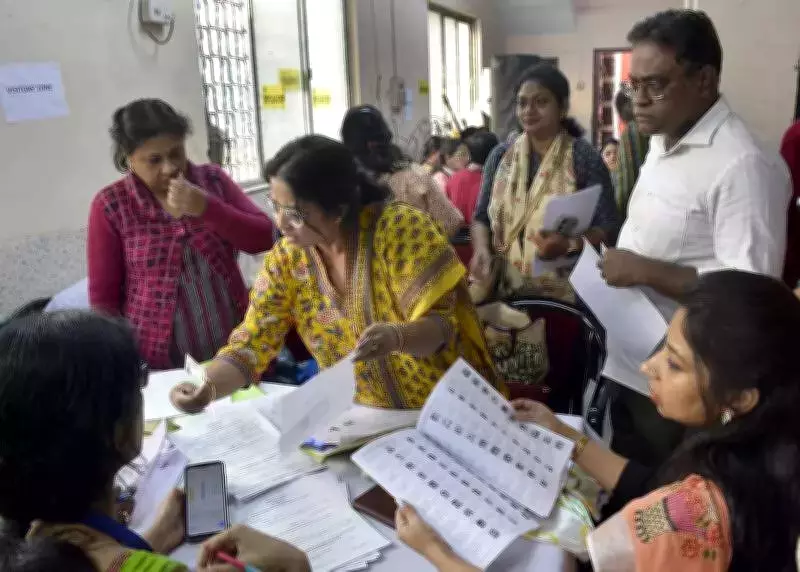
Sources indicate that till midnight on Monday, micro-observers or roll observers flipped through the files again of those electors whose documents were not uploaded. However, no decision could be made based solely on their observations. It was noted that no document other than those specified by the Election Commission (EC) was uploaded, while several electors did not turn up for their scheduled hearings.

BLOs' Ground-Level Knowledge Deemed Crucial for Decision-Making
The judges, while going through these files, may call the respective BLOs to check the authenticity of electors. Their feedback is expected to be viewed as one of the crucial deciding factors in this extensive review process. A BLO in Tollygunge shared, "This morning my AERO called me, asking me to segregate the cases where the uploading of electors' enumeration forms along with documents remains pending. He told me that the judge may also question me about the voters in the pending category. I am keeping their documents ready."
An electoral registration officer (ERO) explained that as the BLOs worked at the ground level since the rollout of SIR, they are aware of the electors' status better than others, such as supervisors or AEROs, who were not assigned field visits. "Besides, the BLOs also accompanied the electors who appeared for hearing. So, it is likely that the judges, in a bid to dispose of the pending cases, will also have a word with the BLOs. Hence, the AEROs have alerted them," said the ERO.
Concerns Raised Over Marginalized Voters Without EC-Specified Documents
The BLOs have raised significant concerns regarding voters who lack the EC-specified documents under certain circumstances, especially marginalized sections like daily labourers, who are genuine voters. Swapan Mondal, general secretary of a BLO outfit Votekarmi & BLO Aikya Mancha, stated, "BLOs may get a chance to speak in front of judges for these voters whose names might be struck off from the roll. In those cases, BLOs can be their witnesses, but the final decision is likely to be taken on the basis of the documents submitted by the electors."
This highlights the delicate balance between procedural adherence and ensuring that legitimate voters are not disenfranchised due to documentation issues. The involvement of BLOs in the judicial process underscores their pivotal role in bridging the gap between administrative records and on-ground realities.
The comprehensive scrutiny aims to address the backlog efficiently while maintaining transparency and fairness in the electoral system. The outcome of this exercise could have significant implications for voter inclusion and the accuracy of the electoral roll in Kolkata.