

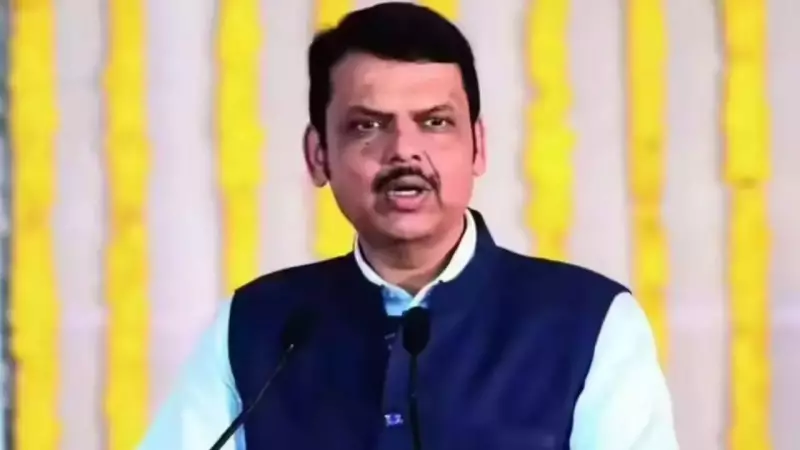
The Mahayuti alliance, comprising the BJP, Shiv Sena, and RPI (A), on Sunday laid out a detailed and ambitious blueprint for Mumbai's future, targeting the upcoming Brihanmumbai Municipal Corporation (BMC) elections. The manifesto, presented by Chief Minister Devendra Fadnavis, centers on leveraging cutting-edge technology to overhaul civic administration and transform the city into a global powerhouse.
Tech-Driven Governance and Anti-Corruption Push
At the heart of the manifesto is a promise to integrate Japanese technology with local systems to solve long-standing civic problems. Fadnavis criticized 25 years of inefficient governance, vowing to bring transparency. A key initiative is "Municipality on your Mobile," designed to deliver services directly to citizens' phones.
The alliance plans to deploy Artificial Intelligence (AI) extensively to curb corruption, speed up approvals, and improve service delivery. An AI-driven platform will be created to fast-track building approvals in the real estate sector. Furthermore, AI labs will be established in all municipal schools to equip students with future-ready skills.

Transport, Safety, and a Controversial Stance on Migrants
Transport and women's welfare received significant emphasis. The alliance promises to double the BEST bus fleet from 5,000 to 10,000 vehicles, transitioning to electric models. A major highlight is a 50% fare concession for women commuters on BEST buses. New 'midi' and 'mini' bus services are planned to improve last-mile connectivity near Metro and railway stations.
In a contentious pledge, Fadnavis stated the alliance would "free Mumbai of Bangladeshis and Rohingyas." He announced plans to develop an AI tool with the help of IIT to identify Bangladeshi migrants.
Flood Control, Health, Housing, and Cultural Promises
The manifesto addresses Mumbai's perennial flooding issue with a "flood-free Mumbai" plan, aiming to end waterlogging within five years using Japanese techniques. An IIT team will study the topography, with plans for four new underground floodwater tanks, drainage revamps, and expediting the BRIMSTOWAD 2 project.
In healthcare, civic hospitals will be upgraded to AIIMS standards, and a digital health card system will store every Mumbaikar's medical history. On housing, the "Pagadimukt Mumbai" initiative aims to resolve tenancy issues, with a pledge to issue Occupancy Certificates for 20,000 stalled buildings. Sustainable high-rises will be incentivized.
Deputy Chief Minister Eknath Shinde stressed cultural preservation, announcing a cultural department within the BMC to promote Marathi art and heritage. Plans include Marathi libraries, cultural centres, a 'Mumbai Fellowship' for youth, and including Mumbai's history and the Samyukta Maharashtra movement in school syllabi. Redevelopment plans for 'koliwadas' and 'gaothans' were also outlined to protect the city's original inhabitants.
The manifesto also commits Rs 17,000 crore for a climate action plan to create a circular economy and promises an inclusive ecosystem for micro-businesses in the Dharavi redevelopment, covering even ineligible residents.






