

As Mumbai prepares for its civic elections, the political landscape of E Ward presents a fascinating study in continuity and change. This densely populated electoral belt, encompassing areas like Byculla, Agripada, Nagpada, Dockyard Road, and Wadi Bunder, has a history of voting for individuals and legacies over strict party ideologies.
A Legacy of Familiar Names and Political Families
The ward's electoral history is marked by enduring political dynasties and strong local connections. Over the decades, voters here have elected corporators from a wide spectrum of parties including the BJP, Congress, Shiv Sena, Samajwadi Party, and hyper-local outfits like the Akhil Bharatiya Sena, founded by gangster-turned-politician Arun Gawli.
The Jadhav family, with Yamini Jadhav and her husband Yashwant (the BMC's Leader of the House), has collectively held office for six terms. The Gawli family has been a formidable force since the 1990s, with Arun Gawli and later his daughter Geeta securing repeated victories. This election season continues that trend, with familiar surnames taking center stage.

In electoral ward No. 210, Sonam Jamsutkar is contesting on a Shiv Sena (UBT) ticket from the area her husband, Manoj, represents as the sitting MLA from Byculla. In neighbouring ward 213, Nassima Juneja carries forward the political legacy of her husband, veteran Congress leader and former corporator Javed Juneja. Another candidate, Waqar Khan (Congress), previously worked for 12 years as a personal assistant to former corporator Rais Shaikh.
The Gawli family is making a concerted push, with both Geeta Gawli and Yogita Gawli contesting from wards within the belt. Their father, Arun Gawli, the area's once undisputed strongman, was recently released from prison after 18 years. While he is not contesting, his return adds a new dimension to the campaign.
Chronic Civic Deficits: The Unchanging Voter Grievances
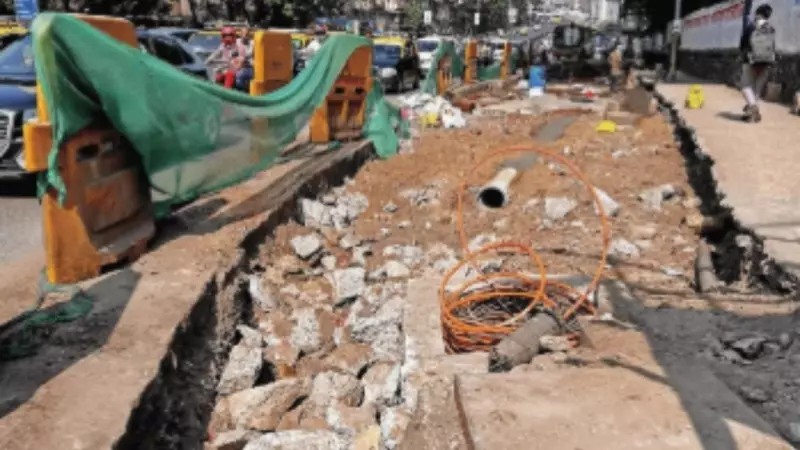
Despite the changing political faces, the core issues plaguing residents have seen little improvement. Former Samajwadi Party corporator from Madanpura, Rais Shaikh, lists persistent problems: erratic water supply, broken footpaths, a shortage of BMC-CBSE schools, and rising pollution.
Shaikh alleges that the BMC's 28-rule code has become "a tool to extract bribes," allowing builders to openly flout construction norms and exacerbating pollution—one of the most frequent complaints in the region.
Resident-activist Sayeed Khan highlights the grossly inadequate healthcare infrastructure. "There is only Nair Hospital, and even there an MRI takes a month, while sonography can take up to 15 days," he says. Local dispensaries suffer from chronic shortages of both staff and medicines.
Even basic amenities are a daily struggle. Khan describes the water quality issue: "Every morning, when the supply starts, we have to drain water for 15-20 minutes until the stench goes away. It's a huge waste in the little time we get."
Poor urban design choices have created new problems. Footpaths fitted with metal barricades instead of bollards have become sites for temporary shelters. Furthermore, a BMC cost-saving decision to remove security guards from several gardens has left these spaces vulnerable to drug abuse at night, raising serious safety concerns.
Historical Transformation Meets Modern Neglect
E Ward's geography tells a story of Mumbai's evolution. Once a swamp between the main island and Mazgaon, it was transformed by the Hornby-Vellard project that united Mumbai's seven islands. Byculla and its surroundings became some of the city's earliest suburbs for the elite.
The arrival of railways in the 18th century brought India's first textile mills, drawing a large working-class population and reshaping the area's social fabric. Today, that former mill land is dotted with high-rises and gated complexes, while older neighbourhoods grapple with foundational civic problems.
Hoshedar Zaroliwala, a resident of Dockyard Road, points to antiquated infrastructure: "Our BEST electricity cables are so old that we need specialised jabbers to conduct the current into our homes."

As elections near, the conversations in E Ward echo those of years past—complaints about crumbling roads, unreliable water, and public services failing to keep pace with rapid vertical growth. For its residents, the hope is not for grand promises but for consistent, basic delivery from their next corporator, regardless of their famous surname.





