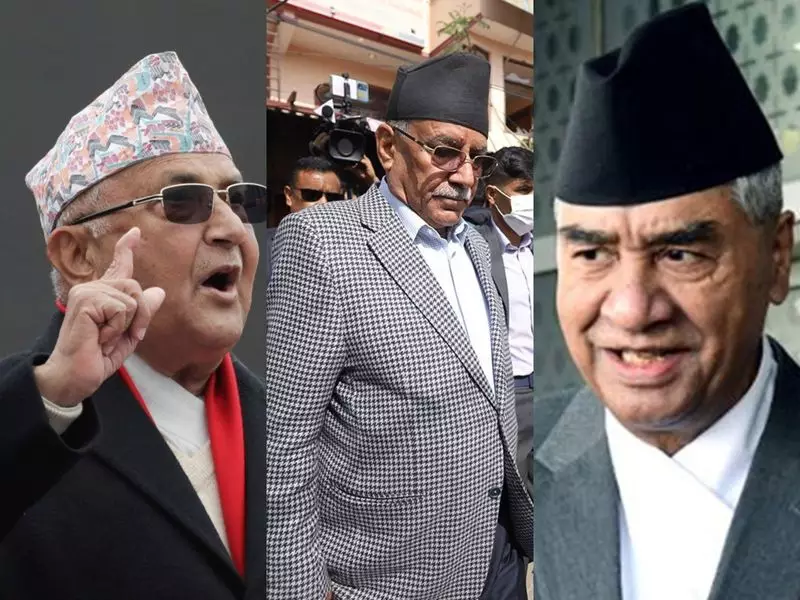
In a significant political development ahead of the upcoming Rajya Sabha elections, several major opposition parties in India have moved towards forming a strategic seat-sharing alliance. The primary objective of this move is to consolidate their strength in the Upper House of Parliament and ensure the victory of their respective candidates in the biennial polls.
Parties Unite for Strategic Gains
The alliance includes prominent national and regional players. The Indian National Congress (INC), the Samajwadi Party (SP), and the Trinamool Congress (TMC) are at the forefront of this collaborative effort. Reports indicate that the parties have reached a mutual understanding on seat-sharing arrangements for the Rajya Sabha elections scheduled for February 27. This cooperation is particularly crucial in states where the arithmetic of the legislative assemblies makes it difficult for a single party to win a seat without external support.
The negotiations have been focused on states with multiple vacancies. A key example is the understanding in Uttar Pradesh, where the Samajwadi Party is likely to support the Congress candidate. In return, the Congress is expected to extend its support to the SP candidate in another seat. Similarly, in Bihar, the Rashtriya Janata Dal (RJD) is part of the broader opposition consultations, aiming to optimize outcomes.
The Electoral Arithmetic and State-wise Dynamics
The Rajya Sabha elections operate on a system of proportional representation by means of the single transferable vote. The number of votes required for a candidate to win depends on the strength of the state legislative assembly and the number of vacancies. This often leads to complex political maneuvering and cross-party voting.
For instance, in Uttar Pradesh, which has 10 vacancies, the Bharatiya Janata Party (BJP) has the numbers to win a certain number of seats comfortably. However, the remaining seats become a battleground where the combined strength of the opposition alliance can tip the scales. The proposed Congress-SP understanding is designed to secure one seat for the Congress, which it might not win on its own, and ensure a smooth win for the SP on another.
In West Bengal, the ruling Trinamool Congress is confident of winning the seats it is contesting but remains part of the broader opposition coordination. The alliance's strategy is not limited to these states but is a pan-India effort to present a united front, signaling cohesion ahead of future electoral challenges.
Implications for National Politics
This move towards a seat-sharing alliance for the Upper House elections carries substantial political weight. The Rajya Sabha, as a permanent house not subject to dissolution, plays a critical role in reviewing and amending legislation passed by the Lok Sabha. A stronger opposition bloc in the Rajya Sabha can influence government policy and legislative agenda.
The formation of this alliance indicates a pragmatic approach by opposition parties to set aside differences for tactical gains. It demonstrates a recognition that cooperation is essential to counter the ruling party's dominance in many state assemblies. While this is a specific arrangement for the Rajya Sabha polls, political analysts are watching to see if this collaboration can evolve into a more stable, long-term coalition for general elections.
The success of this understanding will be tested on election day, February 27, when members of state legislative assemblies cast their votes. A successful execution will not only increase the opposition's tally in the Rajya Sabha but also boost morale and set a precedent for future electoral partnerships.