

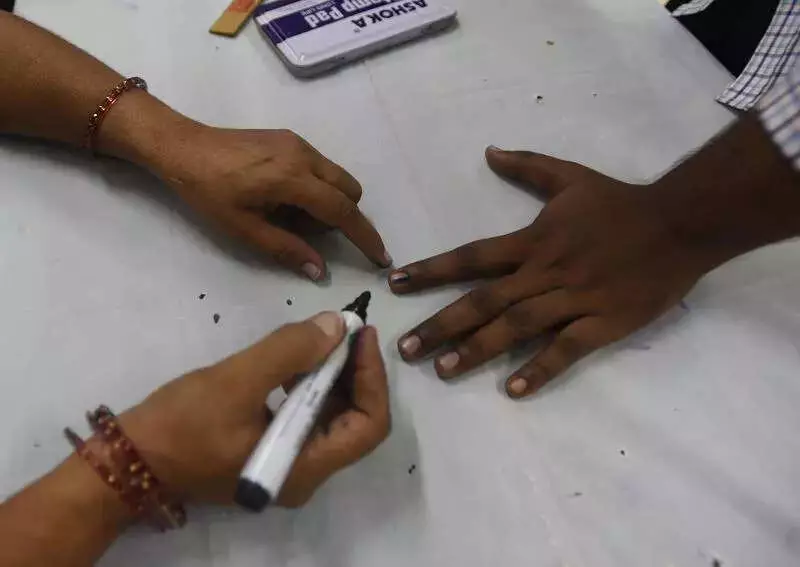
Senior election officials in Pune issued a crucial directive on Tuesday. They instructed municipal commissioners to ensure a swift transfer of electronic voting machines. These EVMs, used in recent municipal corporation polls, must reach district collectors within just two days after the counting concludes.
Timeline for Upcoming Rural Elections
The State Election Commission announced important dates. Voting for twelve zilla parishads and 125 panchayat samitis is scheduled for February 5. Counting will follow on February 7. Officials emphasized the need for prompt deployment of both manpower and polling equipment.
Five districts fall under the Pune division. Three districts each come under Konkan and Chhatrapati Sambhajinagar divisions. This geographical spread makes timely logistics absolutely essential.

Redeployment of EVMs and Security Measures
A senior SEC official explained the plan. "The EVMs used in municipal corporation elections will be redeployed for ZP and PS polls," the official stated. A specific security protocol begins on January 17. On that date, EVM memory cards must be removed and deposited securely in the government treasury.
District collectors face additional responsibilities. They must make all necessary arrangements for election staff. The upcoming elections are significant. They will decide 731 ZP seats and 1,462 PS seats across the state.
Model Code of Conduct in Effect
The model code of conduct took effect on Tuesday. It applies to all poll-bound areas. The SEC's order, dated November 4, 2025, outlines specific rules. Any action aimed at influencing voters in these areas is prohibited, even outside their official jurisdiction.
The order does provide one key exception. Relief measures related to natural disasters remain unrestricted. This ensures that essential aid can continue without political interference.
Voting Procedure and Candidate Requirements
Officials clarified the voting process. Since ZP and PS elections are being held together, each voter gets to cast two separate votes. One vote is for their zilla parishad electoral division. The other is for their panchayat samiti college.
Candidates have specific documentation requirements. Those contesting reserved seats must submit their caste certificates along with nomination papers. The rules are strict regarding this proof.
"If the certificate is unavailable, proof of application to the caste scrutiny committee will be mandatory," another official said. There is a critical deadline. Failure to submit the final certificate within six months of the results will lead to cancellation of the election. This cancellation would apply with retrospective effect.
Polling Infrastructure and Voter Lists
The scale of the election is vast. Authorities plan to set up around 25,482 polling stations. They will arrange 51,537 control units and a substantial 1,10,329 ballot units.
Voter lists are based on the assembly electoral rolls from July 1, 2025. "Further requirements will depend on the candidates who file nominations," an official noted. While the SEC cannot handle additions or deletions to the rolls, they have identified duplicate entries. These duplicates have been flagged with a special marker for clarity.
Accessibility and Special Arrangements
The official confirmed one limitation. "Home voting, as seen in Lok Sabha and assembly polls, will not be available for these elections," he said. However, polling stations will offer several special facilities.
These include ramps, wheelchairs, and basic amenities. The facilities are intended for senior citizens, persons with disabilities, pregnant women, and women with infants. In a move to encourage women's participation, areas with a high proportion of women voters will see "pink polling booths." These will be staffed entirely by women.
Focus on Pune District
Pune district itself is a major electoral battleground. Elections will be held for 73 ZP divisions. There are also 13 panchayat samitis comprising 146 members.
The district has a large population of 2.97 crore. To serve these voters, authorities will establish 3,605 polling stations. These will house 7,931 individual polling booths. A small army of about 23,545 polling personnel will be deployed to manage the process smoothly.






