

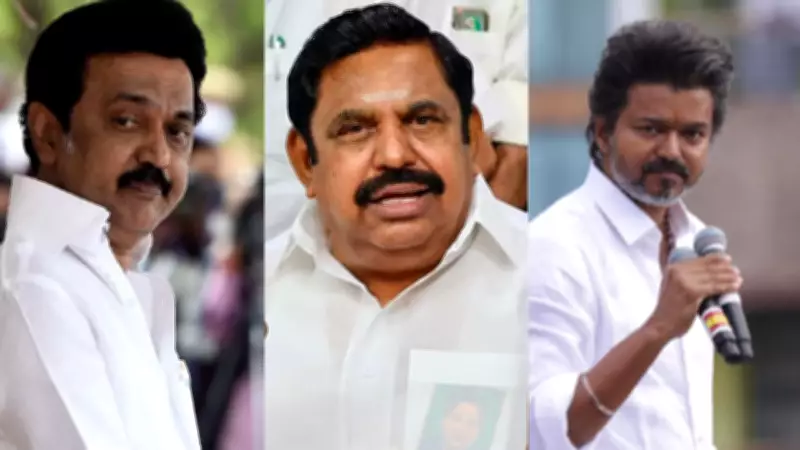
Telugu Community Emerges as Kingmaker in Tamil Nadu's High-Stakes Assembly Elections
The upcoming Tamil Nadu assembly elections, scheduled for April 23, have transformed into a fiercely competitive triangular contest. The ruling Dravida Munnetra Kazhagam (DMK), the opposition AIADMK-led NDA alliance, and actor-turned-politician Vijay's Tamizhaga Vetri Kazhagam (TVK) are locked in a battle where the Telugu-origin voter base is set to play a pivotal, potentially decisive role.
Demographic Dominance and Electoral Significance
According to the 2011 census, the Telugu community constitutes a substantial 33.4% of Tamil Nadu's total population. Excluding the Nagercoil-Tootukudy belt, approximately one out of every three voters across the state belongs to this demographic. Recent estimates suggest there are around 1.4 crore Telugu voters out of the total 5.6 crore electorate, making them an undeniable electoral force.
This significance is amplified by the tight nature of the contest. After securing a strong mandate in 2021, the DMK alliance, led by Chief Minister MK Stalin, now faces anti-incumbency headwinds. The party has forged alliances with Congress, Maralarchi Dravida Munnetra Kazhagam (MDMK), Viduthalai Chiruthaigal Katchi, and Communist parties. Meanwhile, the opposition NDA, comprising AIADMK, BJP, and PMK, is mounting a robust challenge. The entry of Vijay's TVK as a formidable third force has further intensified the competition, turning every vote, especially from sizable blocs, into a critical asset.

Strategic Candidate Fielding by Major Parties
Recognizing the Telugu community's kingmaker potential, both the DMK and AIADMK have strategically fielded a significant number of candidates from this background.
- DMK's Approach: Contesting 164 out of 234 assembly constituencies, the DMK has nominated nearly 17 candidates of Telugu origin. The party, which holds a strong presence in the Tiruvannamalai-Vellore and coastal belts, has delegated the crucial task of mobilizing Telugu voters to three key ministers. Public Works and Highways Minister EV Velu, who has a Telugu background, is leading efforts in the Tiruvannamalai-Vellore region. Municipal Administration Minister KN Nehru has been entrusted with a similar responsibility in Trichy and the delta constituencies, including Nagapattinam and Chidambaram. Additionally, Endowments Minister Sekar Babu, a close confidante of Stalin, is focusing on consolidating DMK's prospects in Chennai constituencies.
- AIADMK's Strategy: The AIADMK, contesting 169 seats (with 65 allocated to alliance partners), has fielded an even higher number, with nearly 22 candidates of Telugu origin. This move strategically targets the party's strongholds in Coimbatore, Salem, Tirupur, Avinashi, and Karur regions, which have a sizeable Telugu population. Notably, despite a strong DMK wave in the 2021 elections, AIADMK managed to secure 10 assembly seats in the Coimbatore-Salem belt, underscoring the region's competitive nature and the importance of local demographics.
The Third Force and the Road Ahead
The emergence of actor Vijay's TVK adds a dynamic layer to this electoral calculus. As a new but significant player, TVK's appeal could disrupt traditional vote banks, making the Telugu community's allegiance even more fragmented and sought after. With the election poised on a knife's edge, the strategies employed by DMK, AIADMK, and TVK to court the 1.4 crore Telugu voters will likely determine the final outcome. The focus on regional leaders, candidate selection, and targeted campaigning in Telugu-populated areas highlights the community's unprecedented influence in shaping Tamil Nadu's political future.






