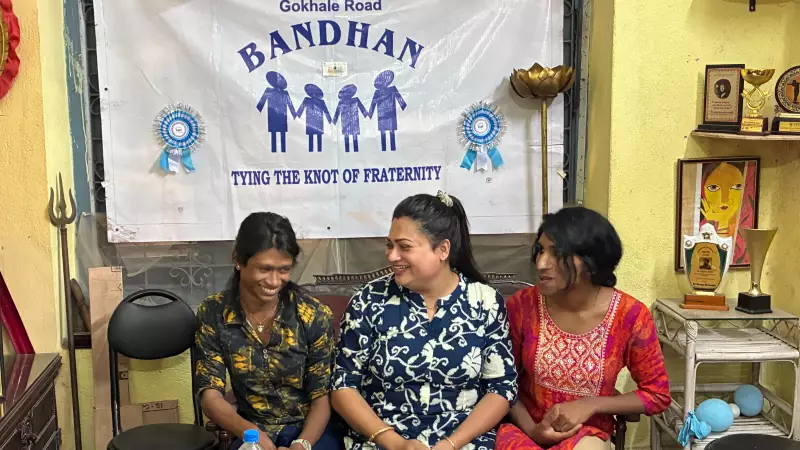
Members of West Bengal's transgender community are living in fear of losing their fundamental voting rights as the state government conducts its Special Intensive Revision (SIR) process to update electoral rolls. The drive, intended to ensure accuracy in voter registration, has instead created significant barriers for transgender individuals already marginalized by society.
Documentation Crisis Leaves Community Vulnerable
At the heart of the problem lies a critical documentation gap. Many transgender individuals like Atanu Giri, a 21-year-old from Chandannagar, lack essential identification papers after being rejected by their families. "I only have my Aadhaar and PAN cards with me and nothing else," says Giri, who now resides in a shelter home. "For us, our main identity is through the TG (transgender) Card. I have applied for it, but I have not received any verification call."
The situation is particularly dire for those who underwent gender transition. Shikha, who completed all medical procedures to become a woman, holds her voter card in her previous name. "Today I am Shikha. How will it match? The only identity card that I require is the TG card. I am waiting for it after all the procedures and verifications. Most likely, I will lose my voting rights," she shares with The Indian Express.
Systemic Barriers in SIR Process
Transgender rights activist Sinha identifies multiple systemic failures in the SIR process. Many transgender individuals registered as male or female in the 2002 voter list have since transitioned, creating mismatches with current gender identity. Official documents continue to reflect outdated information, creating insurmountable hurdles during the enumeration process.
The challenge begins with obtaining the enumeration form itself. As Sujit, a transgender person who requested anonymity, explains: "Most of us have left our homes, but the Booth Level Officers (BLOs) will give the forms to the family members, who, in turn, do not inform them." Even when attempting online registration, technical requirements like linking voter cards with Aadhaar using matching spellings become problematic.
Social Stigma Compounds Administrative Challenges
Beyond bureaucratic hurdles, deep-rooted social stigma plays a crucial role in excluding transgender individuals from the democratic process. Sinha emphasizes that family rejection often prevents access to essential documentation. "Many transgender individuals are not accepted by their families because of the stigma surrounding gender transition. This leads to a lack of documentation, making it difficult for them to complete the SIR process," she states.
The community's anxiety is palpable. Shikha voices a fear shared by many: "I don't know what the future holds, will I be sent to jail or detention centre because of SIR?" This apprehension stems from complete disconnection from families who might receive official communications from election authorities.
Legal Recognition vs Ground Reality
Activists point to the stark contrast between legal recognition and practical implementation. While the 2014 Supreme Court ruling recognized transgender people as citizens with equal voting rights, the current SIR process fails to accommodate their unique circumstances.
Sinha recalls the landmark judgment but stresses that legal recognition alone is insufficient without practical mechanisms for inclusion. A transman based in Kolkata summarizes the community's position: "We welcome the SIR, but then whenever any change happens, the worst affected are the marginalized sections of society."
Transgender activists argue that the government should have considered marginalized communities before implementing SIR. They emphasize that while ordinary citizens exercise voting rights effortlessly, the combination of documentation gaps and social stigma threatens to disenfranchise an entire community, undermining the very democratic principles the electoral process aims to uphold.