

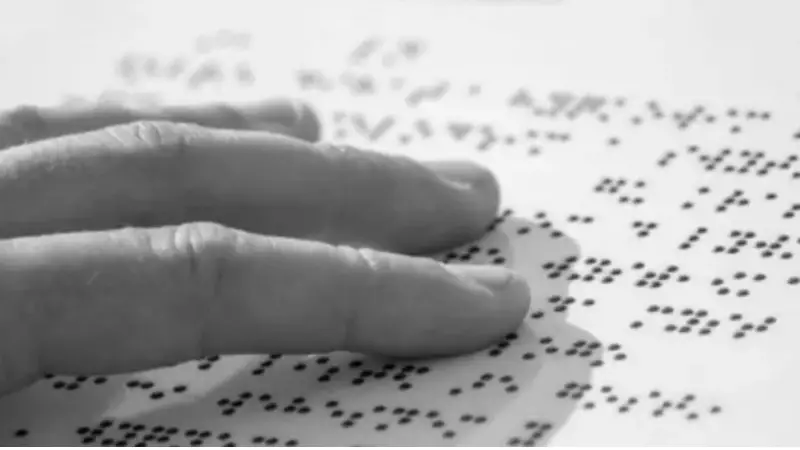
Visually Challenged Voters Exercise Franchise in Pune Despite Braille Shortfall
Visually impaired voters in Pune demonstrated remarkable determination during recent local elections. They cast their ballots despite a noticeable absence of Braille instruction sheets at polling stations.
Personal Stories of Perseverance
Sakina Bedi, a 58-year-old spokesperson for the National Federation of the Blind, participated in the electoral process. She voted at booth number 75 in Kroot Memorial School, Azad Nagar. Bedi reported that polling officials followed rules for physically challenged persons. They allowed her to bypass queues. However, she received no Braille instructions about candidates or parties.
"I had to take assistance from my colleague for voting," Bedi explained. "The voting experience was smooth otherwise, but the lack of Braille materials presented a clear hurdle."

Ravi Wagh, president of the Blind Cricket Association, also cast his vote. Wagh works at B J Government Medical College and Sassoon General Hospital. He has been voting consistently for thirty-four years despite various challenges.
"I felt very happy I could vote as it was my basic right," Wagh stated. He voted alongside his wife Sanjeevani Wagh, who is also visually impaired and serves as principal of a government-run school in Yerawada. Their son Tushar assisted them both.
Accessibility Measures and Gaps
Electronic Voting Machines (EVMs) currently feature Braille markings next to voting buttons. These embossed numbers help visually impaired voters identify candidates independently. The system encourages self-reliance, though voters retain the option to bring a companion for assistance.
Wagh noted a discrepancy between different election types. "We usually get a sheet in Braille in Lok Sabha elections," he said. "But in these local elections we did not get any such sheet." This observation points to inconsistent implementation of accessibility standards across electoral tiers.
Broader Voter Awareness Efforts
Meanwhile, separate voter awareness activities unfolded across Pune. Shripatrao, also known as Bapurao Gund, traveled extensively to encourage citizen participation. The 58-year-old social worker from Phursungi in Haveli tehsil visited villages and cities on his motorcycle.
Gund wore distinctive headgear and clothing adorned with pro-voting slogans. He appeared at various traffic junctions, including St Mary's junction on the Pune-Solapur highway. His mission focused on reminding people of their democratic rights.
"Voting gives us a voice in electing our leaders and shaping public policies," Gund emphasized. "We all need to vote and strengthen our democracy." His efforts highlighted the broader context of civic engagement surrounding the elections.
Context and Turnout
These individual stories emerged against a backdrop of relatively low voter turnout recorded till Thursday afternoon. The determination shown by visually impaired voters contrasted with overall participation rates. Their actions underscored the importance of inclusive electoral practices.
The experiences of Bedi and Wagh reveal both progress and persistent gaps in accessibility. While EVM Braille features represent a step forward, the missing instruction sheets indicate areas needing improvement. These voters' perseverance serves as a powerful reminder of democracy's fundamental principles.






