

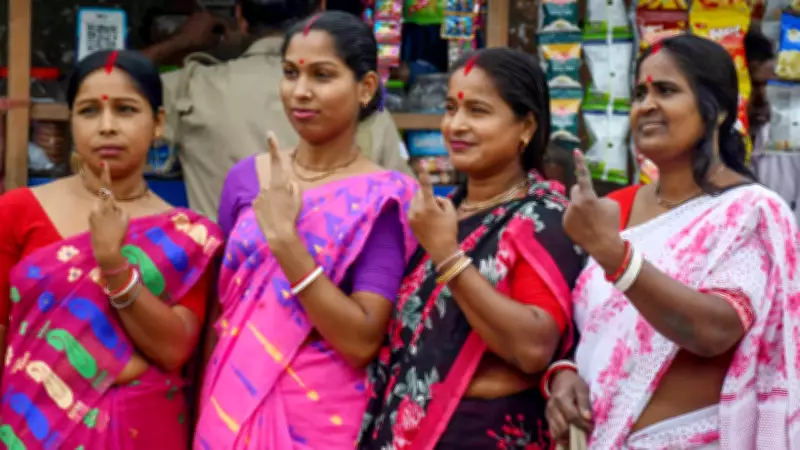
Women Electors Set New Records in Voter Turnout Across Three Regions
In a remarkable display of civic engagement, women voters in Assam, Kerala, and Puducherry achieved unprecedented polling percentages on Thursday, not only setting new highs for female participation but also outperforming their male counterparts in these states and the Union territory. This surge in women's turnout has significantly boosted the overall electoral participation, highlighting a growing trend of gender parity in Indian democracy.
Detailed Breakdown of Voter Turnout Figures
The data reveals impressive numbers: in Puducherry, a staggering 91.4% of the female electorate cast their votes, while Assam saw 86.5% and Kerala recorded 81.2%. In comparison, male voter turnout stood at 88.1% in Puducherry, 85.3% in Assam, and 75.1% in Kerala. This resulted in a notable gender turnout gap, with Kerala showing the widest disparity at nearly 6 percentage points, followed by Puducherry at 3.2 percentage points, and Assam with a minimal gap of just 1.1 percentage points.
Political Parties' Focus on Women Voters
The enthusiastic participation by women electors has not gone unnoticed by political parties, many of which have been actively targeting this demographic in their manifesto promises. For instance, in Kerala, the Left Democratic Front (LDF) has committed to increasing women's participation in the workforce to 50%, while the United Democratic Front (UDF) has offered free travel for women in state buses. These initiatives reflect a strategic effort to appeal to and empower female voters, contributing to the heightened turnout.

Impact on Overall Polling Percentage
The increased involvement of women voters has played a crucial role in elevating the overall polling percentage across Assam, Kerala, and Puducherry. This trend underscores the importance of inclusive electoral policies and the growing influence of women in shaping political outcomes. As elections continue to evolve, such data points to a positive shift towards greater gender equality in voter participation, potentially influencing future campaign strategies and governance priorities.






