Gurugram was brought to a standstill by 350mm of rainfall over two days, inundating several parts of the city and exposing critical infrastructure vulnerabilities. A carriageway cave-in on National Highway-48 near Narsinghpur triggered massive traffic congestion and sparked a blame game between the Gurugram Metropolitan Development Authority (GMDA) and the National Highways Authority of India (NHAI).
NH-48 Cave-In Causes Major Disruption
The Delhi-Jaipur highway became the epicentre of disruption after a portion of the carriageway caved in on Tuesday evening at a site where GMDA is laying a stormwater drainage culvert using trenchless technology. NHAI, in a post on its official X account, blamed GMDA for the collapse, stating that rainwater seeped through utility ducts and pipes and washed away the soil supporting the carriageway at the culvert site.
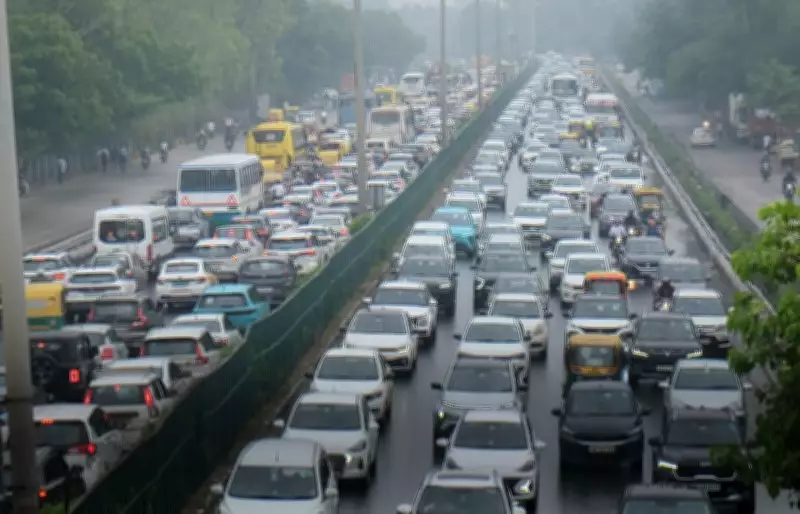
The cave-in forced authorities to barricade two of the four lanes for nearly two days, resulting in a traffic jam stretching about 3 km by Wednesday afternoon. Commuters abandoned their vehicles and walked through waterlogged roads, while more than 1,000 police personnel were deployed at critical junctions to manage traffic and assist stranded motorists.

Civic Agencies Defend Monsoon Preparedness
Despite the disruption, civic authorities defended their monsoon preparedness, claiming that most identified waterlogging hotspots remained functional during the heavy rainfall. GMDA CEO PC Meena said the authority had identified 42 waterlogging-prone locations across the city and undertaken extensive desilting, restoration of stormwater channels, and strengthening of drainage connectivity before the monsoon.
Meena noted that these measures ensured that locations such as AIT Chowk, Tulip Chowk, Medanta Road, Rezang La Chowk, the Sector 22/23 and 45/46 stretches, the entire Southern Peripheral Road corridor, and the Hero Honda Chowk-Umang Bhardwaj Chowk stretch remained largely free from prolonged water accumulation during Tuesday and Wednesday's rain.
Municipal Corporation Highlights Pre-Monsoon Works
The Municipal Corporation of Gurugram also asserted that pre-monsoon works had yielded results. Mayor Rajrani Malhotra said de-watering of 28 ponds to enhance their storage capacity had helped prevent flooding in areas such as Rajendra Park, Sector 17, and Wards 30 and 32 despite the intense rainfall. Municipal Commissioner Pradeep Dahiya said the corporation had shifted its focus from temporary measures to permanent drainage solutions.
Infrastructure Vulnerabilities Exposed
The heavy rain and subsequent cave-in highlighted ongoing infrastructure challenges in Gurugram. The blame game between GMDA and NHAI over the NH-48 collapse underscores coordination gaps between agencies responsible for urban development and highway maintenance. Commuters faced severe delays, with many spending hours in traffic or abandoning their vehicles altogether.
The 350mm rainfall over two days is among the highest recorded in recent years, testing the city's drainage capacity. While civic agencies claim improved preparedness, the NH-48 incident suggests that critical infrastructure remains vulnerable to extreme weather events.