

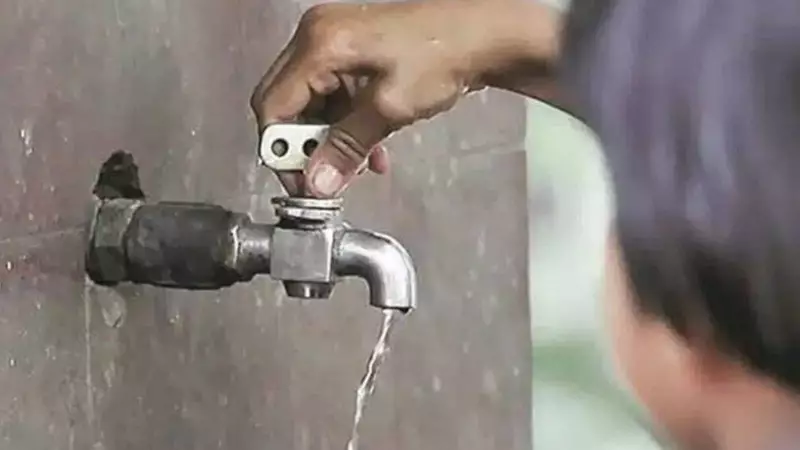
Delhi Jal Board Grapples with 45,000 Water Contamination Complaints in Nine Months
A recent government report has brought to light a significant public health concern in the national capital. The Delhi Jal Board (DJB) received a staggering 45,000 complaints related to water contamination in just nine months, from April 1 to December 31 of last year. This revelation comes amid growing worries about the city's aging drinking water infrastructure.
Trans-Yamuna Area Records Highest Number of Grievances
The data shows a clear geographical concentration of problems. The Trans-Yamuna area, encompassing Assembly constituencies like Trilokpuri, Kondli, and Laxmi Nagar, registered the highest number of complaints at 9,308. Other heavily affected zones included Circle-2 with 5,305 complaints and Circle-8 with 7,141 complaints.
Officials noted that the majority of these grievances poured in during the summer and monsoon months, from April to September. This period typically sees increased water consumption and frequent supply shortages. Residents reported issues like foul-smelling water and muddy supply through the DJB's 1916 helpline.

Government and DJB Respond with Action Plan
In response to this crisis, Delhi Water Minister Parvesh Sahib Singh issued urgent directives. This action followed reports of over 20 deaths in Indore linked to alleged water contamination. The minister emphasized the need for immediate measures to prevent similar tragedies in Delhi.
"We are taking this situation very seriously," a senior DJB official stated. "Over 98% of the complaints have been resolved already. We have a structured escalation system in place to monitor every case closely until resolution."
The minister also informed the Assembly about the scale of the challenge. He revealed that nearly 50% of Delhi's drinking water pipelines, spanning approximately 7,900 kilometers, are between 20 to 30 years old. A complete replacement of this aging network is estimated to take seven to eight years.
Root Causes: Aging Pipes and Illegal Connections
Officials pinpointed several key factors behind the contamination. Aging infrastructure emerged as a primary culprit. Leaking or tampered house service connections frequently allow pollutants to enter the water supply.
"We have observed that many residents illegally connect to the DJB network through local plumbers," an official explained. "This practice is a root cause of both contamination and significant water wastage."
The use of booster pumps during non-supply hours also poses a risk. These pumps can cause infiltration of polluted groundwater, especially from overflowing stormwater drains or sewage lines. This risk is particularly high in vulnerable localities where pipelines run close to sewer lines.
Ongoing Measures to Ensure Safe Water
The DJB has launched a multi-pronged strategy to tackle the issue. Following the minister's directions, CEO Kaushal Raj Sharma instructed engineers to address all pending complaints within two days. Engineers are now required to promptly inspect household connections and ensure issues are resolved completely.
A massive sewer line desilting campaign began last April to prevent blockages. The board has deployed 166 Desilter machines and 189 DICCI sewer cleaning machines across the city. Manhole repairs and sewer line replacements are also underway in various zones.
Water line replacements and new installations are being prioritized. Officials have directed extensive water sampling in problematic areas, schools, and hospitals. The DJB lifts roughly 1,700 water samples daily from sources to taps, including reservoirs, tube wells, and households.
"We are strengthening our technical strategy," a senior official added. "This includes replacing old, corroded pipelines, regular flushing, chlorination, and increasing our fleet of mobile water testing vans. Our goal is to ensure safe water supply for every Delhi resident."
The government is planning a comprehensive revamp of Delhi's entire drinking water network. While the task is monumental, the data shows a 98.7% resolution rate for the thousands of complaints, indicating active efforts to manage the crisis.






