

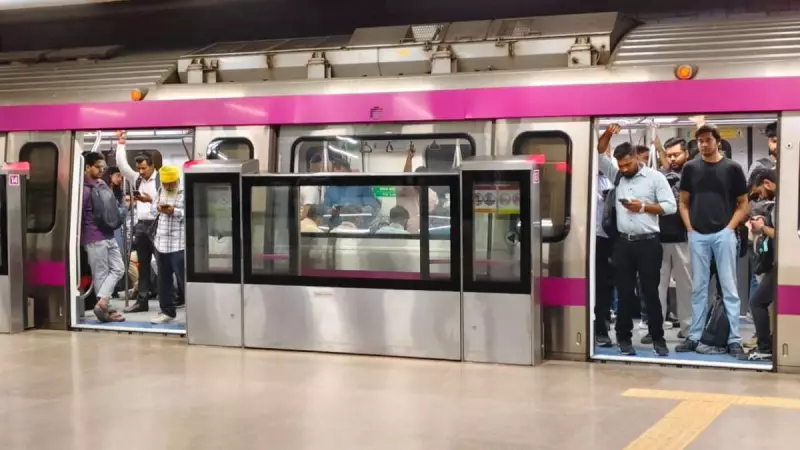
Every day, millions of commuters in India's capital rely on the Delhi Metro, a symbol of modern urban transport. Yet, few know the fascinating and unique details surrounding its historic opening. As the Delhi Metro Rail Corporation (DMRC) celebrates another milestone, we delve into five lesser-known facts about its inauguration day that shaped the city's future.
The Unconventional Inauguration Venue and Date
The Delhi Metro did not begin its journey from a grand central station or on a typical weekday. Its first operational section, the 8.4 km long Red Line segment between Shahdara and Tis Hazari, was thrown open to the public on December 25, 2002. Interestingly, the inauguration was held on Christmas Day, a choice that was both symbolic and practical, marking a gift of modern infrastructure to the city's residents.
Furthermore, the inaugural ceremony was not held at either terminus. Instead, it took place at the Kashmere Gate station, which was still under construction at the time. This highlighted the project's forward-looking vision, focusing on a future interchange hub that would become the network's bustling heart.

The Humble Beginnings of a Giant Network
Today's sprawling network, spanning over 390 kilometers, had remarkably modest beginnings. On that first day, only four stations were functional: Shahdara, Welcome, Seelampur, and Tis Hazari. The initial fleet consisted of just a handful of trains, catering to a public that was curious yet cautious about this new mode of travel.
The scale of public response, however, was immediate. Citizens flocked to experience the speed, cleanliness, and reliability of the metro, a stark contrast to the city's existing transport options. This immediate acceptance laid the foundation for the rapid expansion that followed in the subsequent phases.
Behind-the-Scenes Challenges and Triumphs
The path to the inauguration was paved with immense technical and logistical challenges. Engineers and workers battled complex underground geology and navigated densely populated areas to lay the tracks. A little-known fact is the meticulous safety testing conducted for months before the launch, ensuring every system, from signaling to train control, was flawless.
The project was also a landmark in international collaboration, with significant expertise and technology coming from Japan. The successful inauguration stood as a testament to the DMRC's commitment to punctuality and quality, setting a new benchmark for infrastructure projects in India.
The Lasting Impact on Delhi's Fabric
The inauguration of the Delhi Metro's first section was more than just the launch of a transit system; it was the dawn of a new urban culture. It promised and delivered reduced traffic congestion, lower pollution, and unprecedented connectivity for millions.
From those first four stations, the network has grown into a lifeline, transforming real estate patterns, empowering women commuters with safe travel, and becoming a point of pride for the national capital. The quiet inauguration on a Christmas morning in 2002 truly ignited a revolution in how Delhi lives, works, and moves.






