

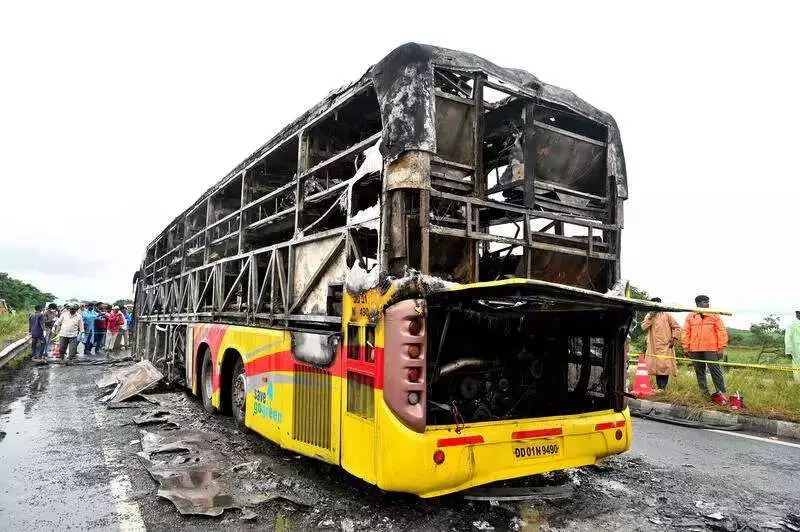
In a decisive move aimed at bolstering road safety, the Andhra Pradesh transport department has formally urged the central government to stop issuing All India Tourist Permits (AITPs) to private sleeper buses. This recommendation comes as a direct response to the disproportionate involvement of such buses in severe road accidents.
Three Key Recommendations Submitted to Centre
The department has officially communicated its stance to the Ministry of Road Transport and Highways (MoRTH). The proposal was submitted in November 2023, just ten days after the devastating Kurnool bus accident that claimed around 20 lives. According to AP Deputy Transport Commissioner (IT) Purendra, the state has put forward three major recommendations for the upcoming amended AITP Rules 2025.
The primary recommendation is the outright non-issuance of AITPs to private sleeper buses. "We believe that non-issuance of AITP to sleeper buses will help the department regulate their movement," Purendra told TOI. He emphasized that this would compel operators to adhere to Motor Vehicles Act norms, potentially leading to a significant reduction in accidents.

Regulating Interstate Operations and Enhancing Accountability
Beyond the sleeper bus ban, the AP transport department has suggested two other crucial amendments to the permit rules. First, it recommends that all private travel buses operating with an AITP must have either their starting point or ending point within their home state. This measure is intended to curb long, unchecked interstate journeys.
Second, the department has advocated for a mandate requiring these buses to share their passenger lists with the transport authorities. This would improve traceability and accountability in case of emergencies or regulatory violations.
Addressing the Challenge of Interstate Enforcement
The push for stricter regulations stems from a significant enforcement gap. Buses operating under AITPs often travel across multiple states, creating a complex web of jurisdiction. This dispersion makes consistent safety checks, periodic inspections, and holding operators accountable exceedingly difficult. Officials argue that this regulatory loophole allows non-compliant vehicles to continue operating with heightened risk.
"Restricting AITPs for private sleeper buses is intended to curb the operation of higher-risk vehicles on long inter-state routes," Purendra noted. The department's recommendations are now part of the broader consultative process as MoRTH drafts the new AITP Rules 2025, having sought input from all states.
The state's proactive stance highlights a growing concern over passenger safety in private interstate bus travel, particularly focusing on vehicle design and operational oversight to prevent future tragedies.






