

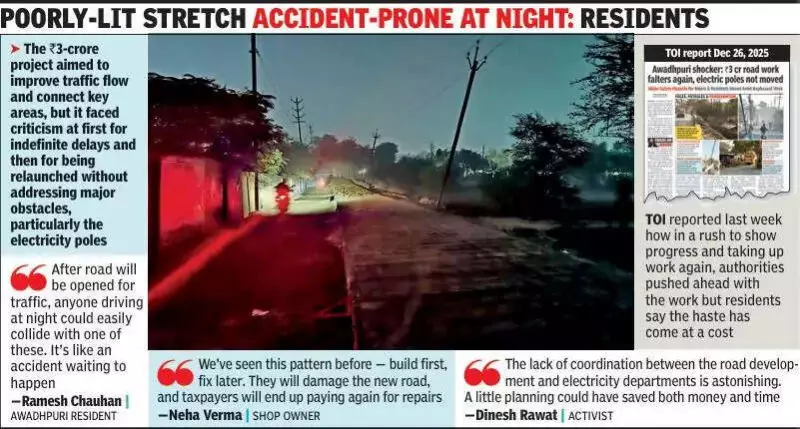
A contentious Rs 3 crore road development project in Bhopal's Awadhpuri area has left local residents grappling with hazardous conditions and a frustrating dilemma. The core of the problem lies with dangerously placed electricity poles that now jut out along a poorly-lit stretch of the newly constructed road.
A Road to Nowhere: The Safety Dilemma
The project, intended to improve traffic flow and connect key localities, has become a glaring example of negligence due to what residents call poor planning and a severe lack of coordination. In a rush to show progress, authorities pushed ahead with the construction work without first relocating the essential electricity poles. This haste has come at a significant cost to public safety.
As a result, several poles now cling precariously to the roadside, posing an immediate and serious threat to motorists and pedestrians, especially after dark. "It's unbelievable that they started building the road without removing the poles first," said Ramesh Chauhan, a daily commuter. "Once the road opens for traffic, anyone driving at night could easily collide with one of these. It's like an accident waiting to happen."

The Vicious Cycle of "Build First, Fix Later"
Residents fear the issue has trapped them in a lose-lose situation and a wasteful cycle of public spending. If the poles are left as they are, they remain a permanent safety hazard. However, if the electricity department finally decides to shift them, the newly laid road will have to be dug up again, damaging the fresh construction and wasting taxpayer money.
"We've seen this pattern before — build first, fix later," lamented Neha Verma, a shop owner near the route. "They will damage the new road, and taxpayers will end up paying again for repairs." This concern highlights a deeper issue of accountability and planning in civic projects.
Official Defense vs. Public Outcry
While local civic groups and activists have slammed the oversight, officials have defended the project's urgency. A senior government engineer involved in the work stated, "The road construction had to begin within the deadline under the development plan. The shifting of poles is being coordinated and will be completed soon. We are ensuring safety measures in the meantime."
However, this explanation offers little solace to the community. Activist Dinesh Rawat pointed out the fundamental flaw: "The lack of coordination between the road development and electricity departments is astonishing. A little planning could have saved both money and time." The visible result on the ground fuels public skepticism about whether speed was prioritized over safety and if the Rs 3-crore investment will stand the test of time without further expensive interventions.
For now, the residents of Awadhpuri continue to live under the shadow of this poorly executed project, with the jutting poles serving as a daily reminder of administrative failure. The pressing question remains unanswered: when will the authorities resolve this dangerous impasse?






