Railways Minister Bans Bandhgala, Calling It Colonial Relic
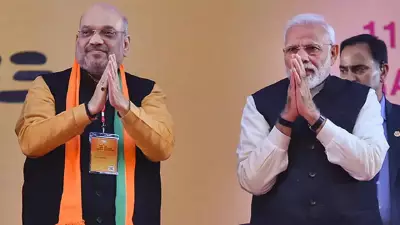
Railways Minister Ashwini Vaishnaw has made a decisive move. He has officially discontinued the bandhgala for Indian Railways employees. The minister dismissed the formal garment as a "colonial" relic. This decision immediately sparked intense debate across the nation.
The Quintessential Indian Garment's Complex Journey
To most Indians, the bandhgala appears deeply Indian by its very name. Ministers and bureaucrats wear it with pride. It graces countless weddings across the country. Yet, its history reveals a fascinating evolution.
The garment traces its lineage from the royal families of Rajasthan. It moved through the sophisticated Mughal court. It adapted on the polo grounds under British rule. Finally, it became a standard uniform for the Indian Railways. Its story mirrors India's own layered history.

There is a valid argument that the modern bandhgala, as we recognize it today, emerged during the British Raj. Minister Vaishnaw's order seems to rest on this historical point. However, critics quickly highlight a crucial flaw in this logic.
If colonial origin is the sole disqualifier, then what about the Indian Railways itself? The vast network was a British creation. Following this logic to its end creates absurd contradictions. It forces us to ask a deeper question.
What truly makes something Indian?Redefining Indianness: Experience Over Purity
India is a nation of a thousand languages. Its heritage includes contributions from migrants, conquerors, poets, and saints. Stories and histories that began beyond its current borders now form part of its soul. In such a rich tapestry, purity of origin is an impossible standard.
The search for Indianness should focus on experience, not origins. It should be about adoption and adaptation. Look at Indian food for clear examples.
- Tandoori Momos: A Tibetan snack transformed by Indian spices and cooking methods.
- Aloo Tikki Burger: A global fast-food concept reinvented with local flavors.
- Gobi Manchurian: A purely Indian creation with a Chinese-inspired name.
In literature and art, the novel and modern painting are Western in origin. Yet, Indian writers and artists have made these forms powerfully their own. They have infused them with local narratives and sensibilities.
Missing the Real Target of Colonial Mindset
Certainly, some colonial-era relics deserve to be discarded. An imperious, disconnected state apparatus is one. An elite detached from public sentiment is another. These are mindsets that truly hinder progress.
Banning a garment like the bandhgala, however, does not attack this deep-seated colonial mindset. It is a superficial gesture. Worse, it risks making something alien that is, through decades of use and cultural integration, quintessentially Indian.
Rudyard Kipling, a defender of the British Empire, wrote the novel Kim in 1901. That story showed how the railways, despite their colonial roots, had already become an essential part of Indian life. The object itself is less important than what people make of it.
Minister Vaishnaw's order has opened a vital national conversation. It forces us to look beyond symbols and examine substance. True decolonization is not about banning clothes. It is about transforming attitudes and dismantling outdated power structures. The bandhgala is not the problem. The mindset that judges worth by origin alone might be.