Bengaluru stands at a critical juncture in its quest for urban cleanliness. The city's performance in the upcoming Swachh Survekshan 2025 is being viewed as a pivotal moment that could define its future approach to solid waste management. This follows a slight dip in its national ranking, prompting introspection and a renewed action plan from civic authorities.
The Current Landscape and Ranking Reality
In the recent Swachh Survekshan 2024 results, Bengaluru secured the 45th position among cities with a population exceeding one lakh. This marked a marginal decline from its 39th rank in the previous year's assessment. The Bruhat Bengaluru Mahanagara Palike (BBMP) has set an ambitious internal target to break into the top 20 cities nationwide by 2025. Special Commissioner for Solid Waste Management, Harish Kumar, emphasized that the forthcoming survey represents a "decisive turning point" for the city's sanitation trajectory.
The evaluation framework for Swachh Survekshan 2025 is rigorous, allocating marks across three key segments: Service Level Progress (SLP) for 40%, Certification for 25%, and Citizen Voice for 35%. This structure places significant weight on both infrastructural outcomes and public perception, making citizen participation indispensable.

The Decentralization Drive and On-Ground Challenges
A central pillar of BBMP's strategy is the aggressive promotion of decentralized waste processing. The civic body is actively encouraging bulk waste generators and residential communities to manage their wet waste at the source through composting or biogas units. Officials highlight that this approach not only reduces the burden on landfills but also cuts down transportation costs and associated carbon emissions.
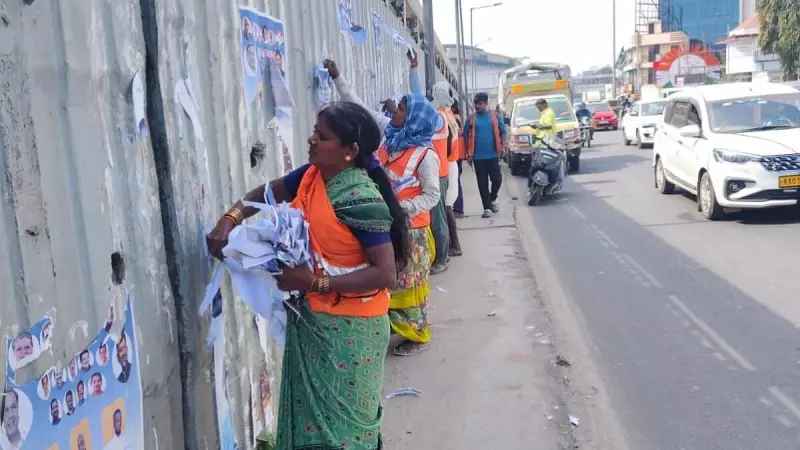
However, the path is strewn with persistent challenges. The city continues to grapple with issues of mixed waste collection, inefficient street sweeping in certain zones, and the perennial problem of garbage black spots. Public awareness and consistent participation from residents remain variable across different neighborhoods. The BBMP acknowledges that overcoming these hurdles requires a synchronized effort from all stakeholders.
Citizen Role and the Road to 2025
The success of Bengaluru's mission heavily relies on its citizens. The 35% weightage for 'Citizen Voice' in the survey underscores this dependency. Residents are urged to segregate waste meticulously at their homes, adopt on-site processing methods, and responsibly dispose of dry and hazardous waste. Furthermore, public cooperation in using the Swachhata App to report grievances and provide feedback is considered crucial for real-time monitoring and improvement.
As the city prepares for this sanitation milestone, the collective action of its administrators, civic workers, and millions of residents will be under scrutiny. The 2025 ranking is more than just a number; it is a test of Bengaluru's commitment to building a sustainable and hygienic urban ecosystem for the future.