

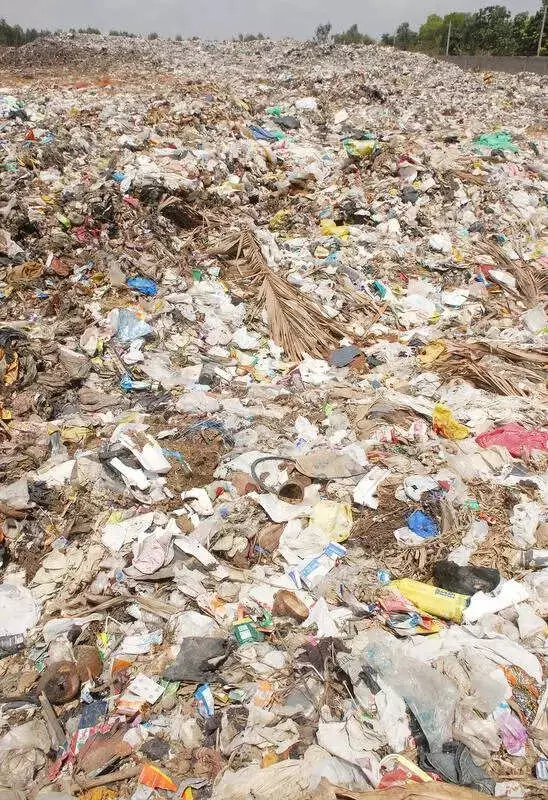
In a significant setback to Bengaluru's efforts to streamline solid waste management, a large number of bulk waste generators in the city are continuing to hand over their garbage to unauthorised collectors. This is happening despite the government notifying an authorised processor for the task, forcing Bengaluru Solid Waste Management Ltd (BSWML) to intervene and demand stricter enforcement from civic bodies.
Official Directive Ignored on Ground
BSWML has written to the North and East city corporations, urging officials to ensure that apartments, tech parks, malls, and other large waste producers tie up exclusively with empanelled vendors. The agency highlighted that weeks after the official announcement of the empanelment system, the situation remains largely unchanged. Mixed waste is still being illegally collected and dumped into GBA compactors, eventually finding its way to landfills, defeating the purpose of decentralised processing.
Currently, Mukka Protein Ltd is the sole empanelled vendor authorised to handle bulk waste in the North and East zones. The company operates a processing facility with a capacity to scientifically treat up to 1,000 tonnes of waste per day. However, compliance from bulk generators has been disappointingly poor.

Resistance from Apartments and Political Hurdles
Mohan Kumar M, the Managing Director of Mukka Proteins, revealed the scale of the challenge. The company has personally approached over 800 apartments and emailed more than 2,000 bulk generators, but only a handful have agreed to come on board. "Many say the same unauthorised operators have been collecting their waste for years and they are afraid to change," he explained. Most of their current partnerships are with government offices and defence establishments, with very little response from tech parks and residential complexes.
A senior BSWML official pointed to political interference as a major obstacle. "We've received complaints of vendors claiming backing from MLAs or other political leaders," the official said. The empanelment system was specifically introduced to eliminate such illegal collection networks.
Scale of the Problem and Environmental Cost
Estimates show that North and East Bengaluru together generate a staggering 700-800 tonnes of bulk waste every day, with 60-70% being wet waste. While dry waste is often picked up by informal recyclers, the wet waste—frequently only partially segregated—gets mixed during transportation and is illegally dumped in landfills. BSWML alleges that unauthorised agencies, including some contractors already engaged in door-to-door collection, are illegally lifting bulk waste without the mandatory permissions.
The agency has now instructed zonal officials to sensitise bulk generators and ensure strict compliance. It has warned that continued violations could attract penalties under the Solid Waste Management Rules. BSWML is empowered to take multiple enforcement measures, including imposing penalties and levying environmental compensation. Action can also be taken under the Greater Bengaluru Governance (GBG) Act, 2024, and the agency can recommend the Karnataka State Pollution Control Board (KSPCB) to initiate legal proceedings under the Environment (Protection) Act, 1986.
Incentives and Future Plans
There is a clear incentive for bulk generators to comply. While BSWML auto-tippers handle regular door-to-door collection, bulk waste generators are mandated to use empanelled vendors. In return, they can seek exemption from the Solid Waste Management cess levied through property tax. BSWML has warned that generators who fail to declare their approved vendor will not be eligible for this exemption.
On pricing, BSWML states that bulk generators are free to negotiate service charges with the authorised vendors. Mukka Proteins echoed this, noting that pricing can vary based on waste volume and segregation quality. The government-fixed processing charge is currently Rs 12 per kg for wet waste, while on-site composting is charged at Rs 3 per kg.

Officials have confirmed that the current empanelment is only for the North and East city corporations. The West, Central, and South corporations will soon get their own authorised processors, with three private vendors already winning tenders and in the final stages of integration. A digital tracking system is being put in place where vendors must integrate their apps with the BSWML dashboard to make waste collection across the city legal, traceable, and transparent.
Civic authorities stress that stronger coordination between BSWML and the city corporations is essential to dismantle the entrenched illegal collection networks and move Bengaluru towards a compliance-driven, sustainable waste processing model.





