

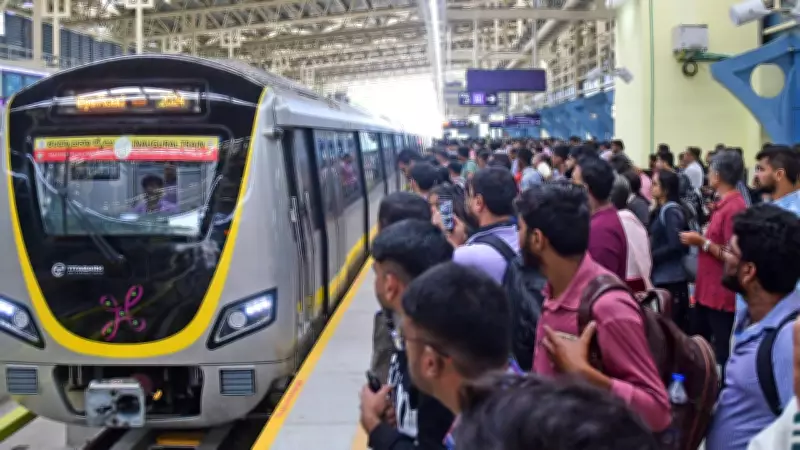
Mumbai Metro Surpasses Bengaluru to Claim Second Place in India's Metro Network Rankings
In a significant shift in India's urban transportation landscape, Bengaluru's Namma Metro has been displaced from its position as the country's second-largest metro system. Mumbai Metro has now overtaken it in terms of operational network length, relegating Namma Metro to third place behind Delhi Metro, which continues to dominate the rankings.
Mumbai Metro Crosses Critical 100-Kilometer Milestone
The Mumbai Metro network has achieved a major milestone by exceeding 100 kilometers of operational length. This expansion includes new corridors such as the Dahisar–Kashigaon line and Line 2B, propelling it past Bengaluru's system. Delhi Metro maintains its substantial lead with an extensive network of 416 kilometers serving 303 stations.
Current Status of Namma Metro's Operations
Bengaluru's Namma Metro currently operates 96 kilometers across 83 stations. This includes approximately 19 kilometers added to the Yellow Line within the past year. However, this expansion has not been sufficient to keep pace with Mumbai's rapid development.

Contrasting Growth Trajectories Over the Years
The growth patterns of these metro systems reveal stark differences in execution and pace:
- Namma Metro's Gradual Expansion: Since its inception in 2011 with an initial 7-kilometer stretch, Bengaluru's system has grown to approximately 89 kilometers over 15 years, averaging about 6 kilometers of new track annually.
- Mumbai Metro's Accelerated Development: Launched in 2014, Mumbai's network has expanded rapidly, demonstrating more efficient project implementation that has enabled it to overtake Bengaluru's longer-established system.
Project Delays and Operational Challenges in Bengaluru
The Bangalore Metro Rail Corporation Limited (BMRCL) has faced considerable criticism for missing multiple project deadlines. Most notably, the Yellow Line experienced a three-year delay in completion, resulting in operational constraints that continue to affect service quality.
Due to construction delays and limited availability of coaches, the Yellow Line currently operates at 9-minute intervals during peak hours. Full operational efficiency is not expected to be achieved for several more months, causing inconvenience to daily commuters.
Future Expansion Plans for Bengaluru's Metro Network
Despite current setbacks, BMRCL has outlined several upcoming projects aimed at expanding the city's metro network:
- Pink Line Extension: A 7-kilometer elevated section from Kalena Agrahara to Tavarekere is planned, with adequate coach availability expected to support partial operations by mid-2026.
- Blue Line Expansion: The stretch from Silk Board to KR Pura is anticipated to become operational in 2026, while the remaining section extending to the airport has been postponed to 2027.
When completed, these expansions are projected to extend Bengaluru's metro network to nearly 175 kilometers, potentially allowing it to reclaim its position in the national rankings. However, the timeline for these developments remains uncertain given the historical pattern of delays.
The displacement of Bengaluru's metro system highlights the competitive nature of urban infrastructure development across India's major cities, with project execution speed becoming an increasingly critical factor in maintaining leadership positions.






