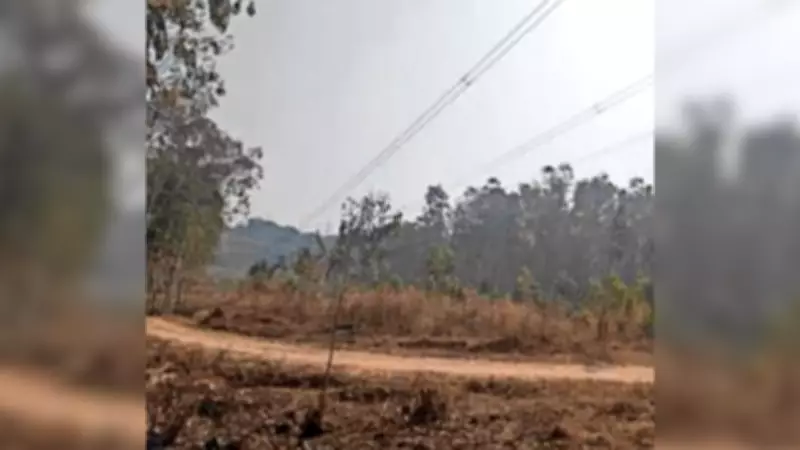
The State Board for Wildlife (SBWL) has granted crucial clearance for a major power transmission upgrade project that promises to ensure uninterrupted quality power supply to Bengaluru's rapidly expanding eastern technology corridor. This long-pending approval breathes new life into an essential infrastructure initiative aimed at replacing a nearly four-decade-old 400kV transmission line that has served as a critical power lifeline for the region.
Reviving a Critical Infrastructure Project
Commissioned in the 1980s, the existing 400kV transmission line stretches between Somanahalli on Kanakapura Road and Mylasandra in Electronics City, forming a vital component of the national grid that connects Karnataka, Tamil Nadu, Andhra Pradesh, and eastern Odisha. Over the years, this infrastructure was extended to serve additional receiving stations at Hoodi, Narasapura, and Kolar, while also transmitting power to parts of Rayalaseema in Andhra Pradesh.
The Growing Power Challenge
Rapid urbanization along east Bengaluru has dramatically transformed the region's power requirements. The mushrooming of mega technology parks, multinational corporate campuses, and large-scale residential projects has significantly increased the electrical load on the aging transmission line, pushing it well beyond its original designed capacity.

A senior engineer from Karnataka Power Transmission Corporation Ltd (KPTCL) explained the critical nature of the situation: "The existing transmission line serves as a primary source for the 400kV Mylasandra substation, which handles daily transmission of 1,500 to 2,000 megawatts of power. Due to the increased load, the station has been experiencing low-voltage issues, making consistent quality power supply increasingly challenging."
The engineer further warned about potential cascading effects: "Any tripping of this overloaded line could potentially trigger cascading failures across Bengaluru's entire 220kV network, severely disrupting power supply across the city."
Navigating Environmental Concerns
The KPTCL project, which involves erecting 24 towers and stringing nearly 10 kilometers of transmission line, encountered significant hurdles when two proposed tower locations fell within the protected boundaries of Bannerghatta National Park (BNP). The project required destringing of existing transmission lines passing through forest areas, necessitating approvals from both SBWL and the National Board for Wildlife (NBWL).
Conservationists voiced strong opposition to the project, expressing particular concern about potential risks to the park's elephant population. In response to these environmental considerations, KPTCL engineers presented revised plans to the wildlife board.
Mitigation Measures and Revised Design
A KPTCL official detailed the modifications made to address environmental concerns: "We decided to replace the existing two towers at their current locations and replace one kilometer of deteriorated conductor installed nearly forty years ago. We informed the board that conductor height would be increased by an additional ten meters. Furthermore, we proposed reducing the right of way (RoW) of the corridor from fifty-two to forty-six meters, thereby minimizing environmental impact."
The corporation provided additional assurances regarding wildlife protection. Contrary to standard ground clearance of eight to ten meters, the upgraded transmission line will feature an elevated ground clearance of fifteen meters, making it significantly more difficult for elephants to come into contact with the conductors.
A forest official confirmed the board's conditional approval: "Based on the revised design and comprehensive mitigation measures proposed by KPTCL, we recommended the proposal to NBWL, subject to certain specific conditions."
Infrastructure for Bengaluru's Future
This clearance represents a significant milestone in balancing urban infrastructure development with environmental conservation. The upgraded transmission line will address critical power quality issues affecting one of India's most important technology corridors while implementing thoughtful measures to protect Bannerghatta National Park's wildlife.

The project's revival comes at a crucial time for Bengaluru's eastern region, where continued technological and residential growth depends on reliable, high-quality power infrastructure. By modernizing this forty-year-old transmission system, authorities aim to create a more resilient power network capable of supporting Bengaluru's position as India's premier technology hub while respecting important environmental considerations.