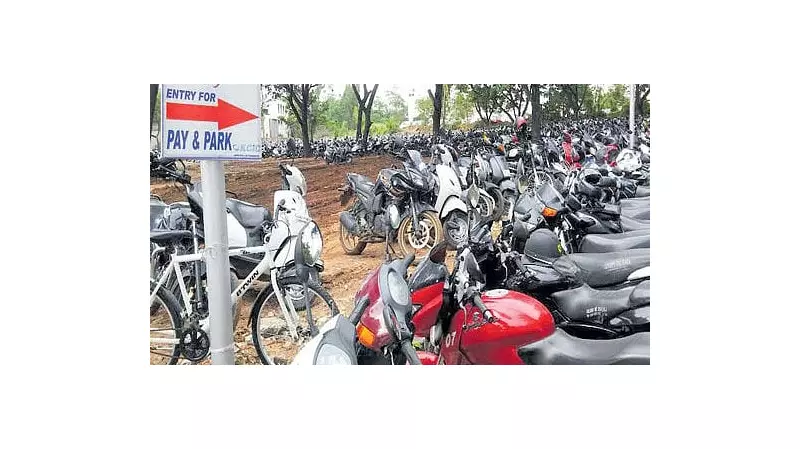
The bustling city of Bengaluru is set to implement a significant change in its traffic management policy. The Bruhat Bengaluru Mahanagara Palike (BBMP) has announced plans to start collecting fees for on-street parking on select streets across several crucial zones. This initiative, aimed at tackling chronic congestion and generating civic revenue, will initially roll out in high-traffic areas including the Central Business District (CBD), Hebbal, and Yelahanka.
Details of the New Parking Policy
The decision was formalized during a meeting of the BBMP's Finance and Taxation Committee held on a recent Friday. The committee gave its official nod to a proposal for the collection of parking fees on specific roads. According to the approved plan, the BBMP will identify and notify particular streets where parking will be monetized. The civic body has set an ambitious target to generate Rs 100 crore annually from this new stream of revenue.
The implementation will be handled through a public-private partnership model. The BBMP will appoint a private agency to manage the on-street parking operations. This agency will be responsible for the collection of fees, enforcement of rules, and overall management of the designated parking spaces. The move is designed not just as a revenue measure but as a traffic decongestion strategy. By putting a price on curb-side parking, authorities hope to discourage long-term parking and free up road space for smoother traffic flow.

Targeted Areas and Implementation Plan
The initial phase of the paid on-street parking system will focus on some of the city's most congested corridors. The zones identified for the launch include:
- The Central Business District (CBD): Encompassing areas like Shivajinagar, which are notorious for parking chaos and traffic snarls.
- Hebbal: A major northern gateway and commercial hub that experiences heavy vehicular movement.
- Yelahanka: A fast-growing suburb in north Bengaluru with increasing traffic pressure.
The BBMP's Special Commissioner (Finance), Thirumala Rao, confirmed that the process to select a competent private agency is already underway. The agency will be chosen through a transparent tender process. Once selected, their primary responsibilities will include managing the parking slots, installing necessary signage and ticketing systems, and ensuring compliance. The revenue-sharing model between the BBMP and the private operator will be detailed in the tender documents.
Broader Context and Expected Outcomes
This initiative is part of a larger, sustained effort by Bengaluru's civic authorities to bring order to the city's parking anarchy. For years, haphazard and free on-street parking has been a major contributor to traffic bottlenecks, reducing effective road width and causing inconvenience to moving vehicles. The new policy is inspired by similar successful models in other Indian metropolitan cities where regulated paid parking has improved traffic conditions.
The expected outcomes of this policy are multi-fold:
- Reduced Congestion: By making on-street parking a paid utility, the BBMP aims to deter unnecessary vehicle storage on roads, thereby decongesting key arteries.
- Revenue for Civic Projects: The projected Rs 100 crore annual income will be channeled into urban infrastructure and maintenance, benefiting the city at large.
- Promotion of Alternative Transport: The policy may encourage the use of public transport, carpooling, or off-street parking facilities for longer durations.
- Systematic Management: Professional management by a designated agency is expected to bring discipline and organization to a currently chaotic aspect of urban life.
While the final list of streets and the exact fee structure are yet to be publicly disclosed, the BBMP's move marks a decisive step towards modernizing Bengaluru's traffic ecosystem. Residents and daily commuters in CBD, Hebbal, and Yelahanka should prepare for this change, which is likely to be implemented in the coming months following the agency appointment. The success of this project could pave the way for its expansion to other congested neighborhoods across Bengaluru.