

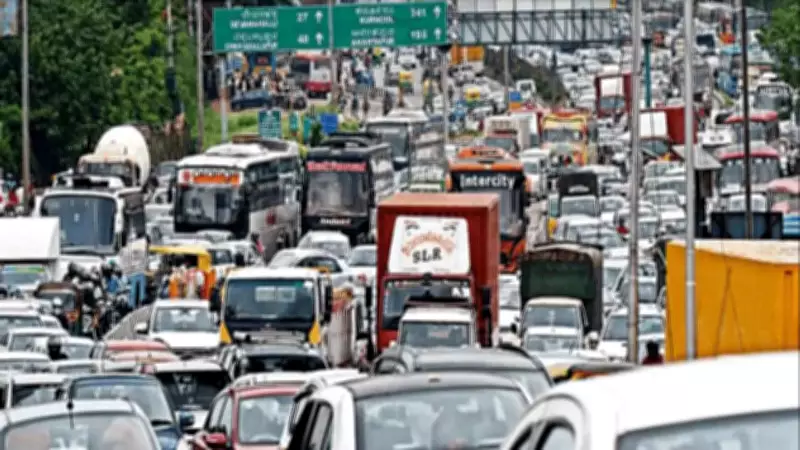
Bengaluru's Vehicle Count Surpasses 1.2 Crore, Straining Urban Mobility System
As of March 31, 2026, the vehicle count in Bengaluru city has breached the staggering figure of 1.2 crore, placing immense pressure on an already-stretched urban mobility infrastructure. This translates to approximately 900 vehicles for every kilometre of city road, highlighting the severe density of traffic in India's tech capital.
Rapid Growth in Vehicle Registrations
In the financial year 2025-26 alone, a massive 7.9 lakh vehicles were added to Bengaluru's roads—averaging more than 2,100 new vehicles per day. This represents a significant increase from the previous year's addition of 7.2 lakh vehicles. The surge has exacerbated congestion across the city, particularly as the road network has seen only limited expansion. The Greater Bengaluru Authority currently maintains a total road length of 14,063 kilometres across its five corporations.
The breakdown of registered vehicles as of March 31, 2026, is as follows:

- Total vehicles: 1.2 crore
- Two-wheelers: 86 lakh
- Cars: 24.8 lakh
- Cabs and taxis: 2.9 lakh
- Autos: 3.8 lakh
Two-Wheelers Dominate Growth
In the absence of adequate public transport options, dependence on private vehicles continues to rise sharply. Two-wheelers dominate this growth, with 5.2 lakh added in 2025–26, alongside 1.5 lakh cars. The highest number of vehicles added in a single month was recorded in October, with 86,014 new registrations.
HSR Layout RTO Leads in Revenue Collection
HSR Layout Regional Transport Office (RTO) generated Rs 1,273 crore in 2025-26, emerging as the top-performing RTO in Karnataka. According to Regional Transport Officer Deepak L, the HSR Layout RTO (KA-01) has held this top position for three consecutive years.
Within Bengaluru, other notable RTO revenue figures include:
- Kasturinagar RTO: Rs 1,098 crore
- Jayanagar RTO: Rs 969 crore
At the national level, Deepak noted that HSR Layout ranks third in revenue collection, following the Pune and Pimpri RTOs in Maharashtra. He explained that the revenue includes taxes from new vehicle registrations, levies on commercial vehicles, enforcement collections, and other sources.
The continuous rise in vehicle numbers underscores the urgent need for enhanced public transportation and infrastructure development to address Bengaluru's growing mobility challenges.






