

Bhubaneswar Municipal Corporation Implements Innovative Water Recycling for Urban Greenery
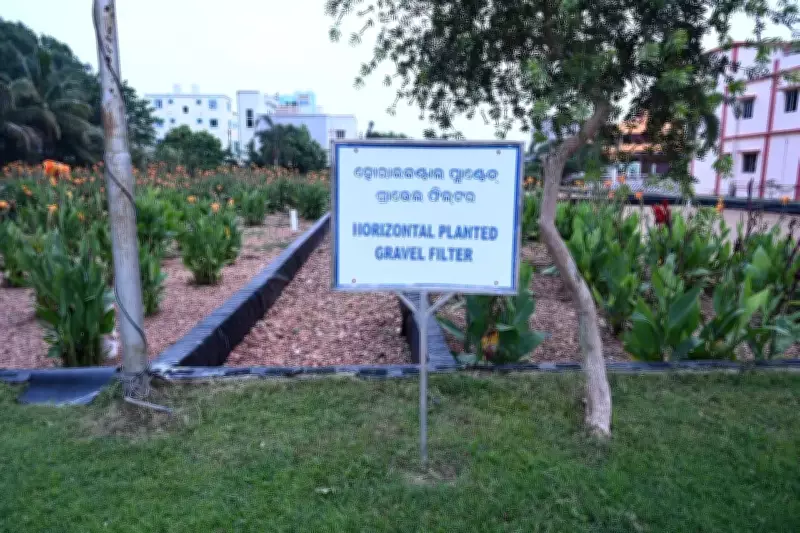
The Bhubaneswar Municipal Corporation (BMC) has launched a significant initiative to repurpose treated wastewater for urban landscaping. This strategic move involves utilizing effluent from sewerage treatment plants (STPs) and faecal sludge treatment plants (FSTP) to irrigate trees and plants across the city's arterial roads, medians, and public spaces.
Optimizing Water Resources for Sustainable Urban Development
Currently, the BMC is drawing approximately 1,000 liters of treated wastewater daily from two FSTP facilities and three STP installations. This recycled water is being deployed to nourish the city's green infrastructure, with water tankers facilitating distribution to plantation sites located farther from the treatment plants.
BMC Additional Commissioner Kailash Chandra Dash elaborated on the operational aspects, stating, "We have decided to intensify the watering to twice daily during summer months. The quantity of water sprinkled on plants will be doubled, incorporating both treated wastewater and regular water supplies."

Protecting Bhubaneswar's Green Canopy During Summer Months
This initiative assumes particular importance during the summer season when water scarcity threatens the city's vegetation. BMC officials estimate that approximately 16,000 liters of water are required daily to sustain the urban greenery, with 1,000 liters now being sourced from treated wastewater.
The corporation manages a substantial 55-kilometer stretch of road medians where exotic and decorative plant varieties require consistent care. Dash emphasized, "The move is designed to ensure plant survival until the monsoon season arrives. We have shrubs along medians and beautified spaces that need protection."
Collaborative Efforts and Expanded Implementation
The BMC has established a productive partnership with the Odisha Forest Development Corporation (OFDC) for daily watering operations. While OFDC contributes resources and manpower, the civic body provides necessary funding support.
Beyond median plantations, the water recycling program extends to six major parks that receive water via tankers. Smaller parks are maintained by resident welfare associations using stored water reserves. A BMC officer noted, "The medians feature exotic and decorative plant varieties that demand proper attention and care throughout the year."
Building on Previous Greening Initiatives
This water conservation effort builds upon the BMC's extensive plantation drive launched during the previous monsoon season. That initiative saw over 10,000 trees planted across 77 parks, 32 crematoriums, and main arterial road medians. Shade-bearing trees were specifically introduced in crematorium areas to enhance environmental comfort.
The current wastewater recycling program represents a practical approach to urban sustainability, addressing both water conservation needs and green cover preservation simultaneously. By repurposing treated effluent that would otherwise go unused, the BMC is creating a circular water economy that benefits Bhubaneswar's environmental health and aesthetic appeal.






