

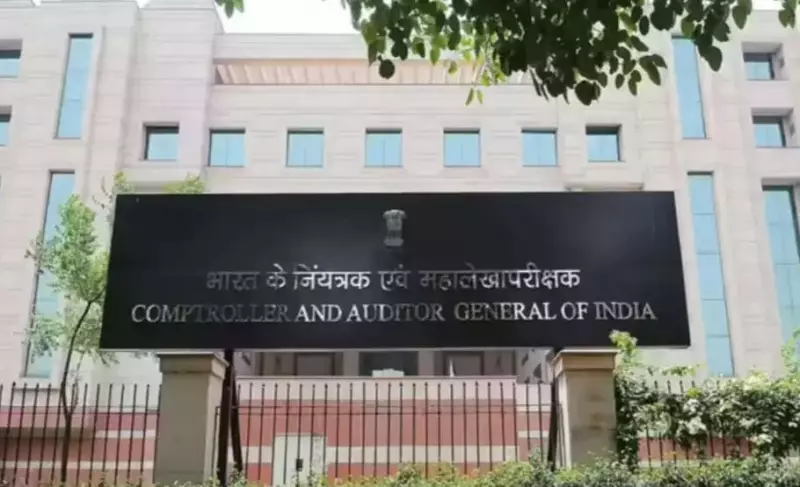
India's Comptroller and Auditor General (CAG), Sanjay Murthy, has raised a major red flag regarding the Direct Benefit Transfer (DBT) system, highlighting that thousands of crores of rupees are being transferred to beneficiaries' accounts without essential checks. He attributed this significant financial leakage to weak data integration and government departments operating in isolated silos.
Gaps in Verification and Siloed Departments
Addressing the inaugural batch of IRS officers at the National Academy of Direct Taxes in Nagpur on Wednesday, Murthy pointed out critical shortcomings. He stated that there are significant gaps in preventing duplication and cross-verifying data. The situation is so fragmented that different joint secretaries within a single ministry often do not refer to the same database.
"We talk about Jan Dhan, Aadhaar, and mobile phone-linked database connectivity. Still, if looking at the maturity level at which the databases are deployed, especially from reports we generate, there is a huge gap," Murthy explained. He emphasized that while schemes are labelled as Aadhaar-based, the crucial process of de-duplication or cross-database verification mandated by the DBT mission is largely missing.

No Uniform Yardstick for a Vast Nation
In a conversation with TOI, the CAG elaborated on the challenges, noting that India's vastness prevents a one-size-fits-all approach. He observed that southern states have a technological head start, leading to more mature and auditable data. "India is a vast country and we cannot have the same yardstick everywhere," Murthy said.
He stressed the importance of examining whether basic checks and balances are followed during scheme implementation. While the negligence may not be deliberate, he insisted on achieving a higher level of accuracy to ensure public funds are used effectively.
Technology: A Double-Edged Sword
On a positive note, Murthy highlighted that technology has drastically reduced audit times in the social sector. Audits that once took much longer can now be completed in about 45 days, allowing his department to audit up to seven schemes simultaneously.
He also mentioned the potential of data mining from various agencies like the Ministry of Road Transport and Highways, the Goods and Services Tax (GST) network, and state financial management systems. As an independent auditor, the CAG can access and correlate data from different schemes to provide a comprehensive oversight view.
Murthy informed the IRS probationers that CAG officers would share their experiences with tax officials for further scrutiny, promoting a collaborative approach to strengthening financial governance and plugging the identified gaps in the DBT architecture.






